In the heart of the North Atlantic lies a spot that many travellers are only just beginning to discover – the Faroe Islands. This remote archipelago, roughly halfway between Iceland and Norway, has quietly become one of Europe’s most fascinating destinations for travellers looking beyond the usual tourist trail. Instead of bustling cities and crowded attractions, the Faroes offer serene landscapes, rich traditions, and communities that have lived in harmony with nature for centuries.
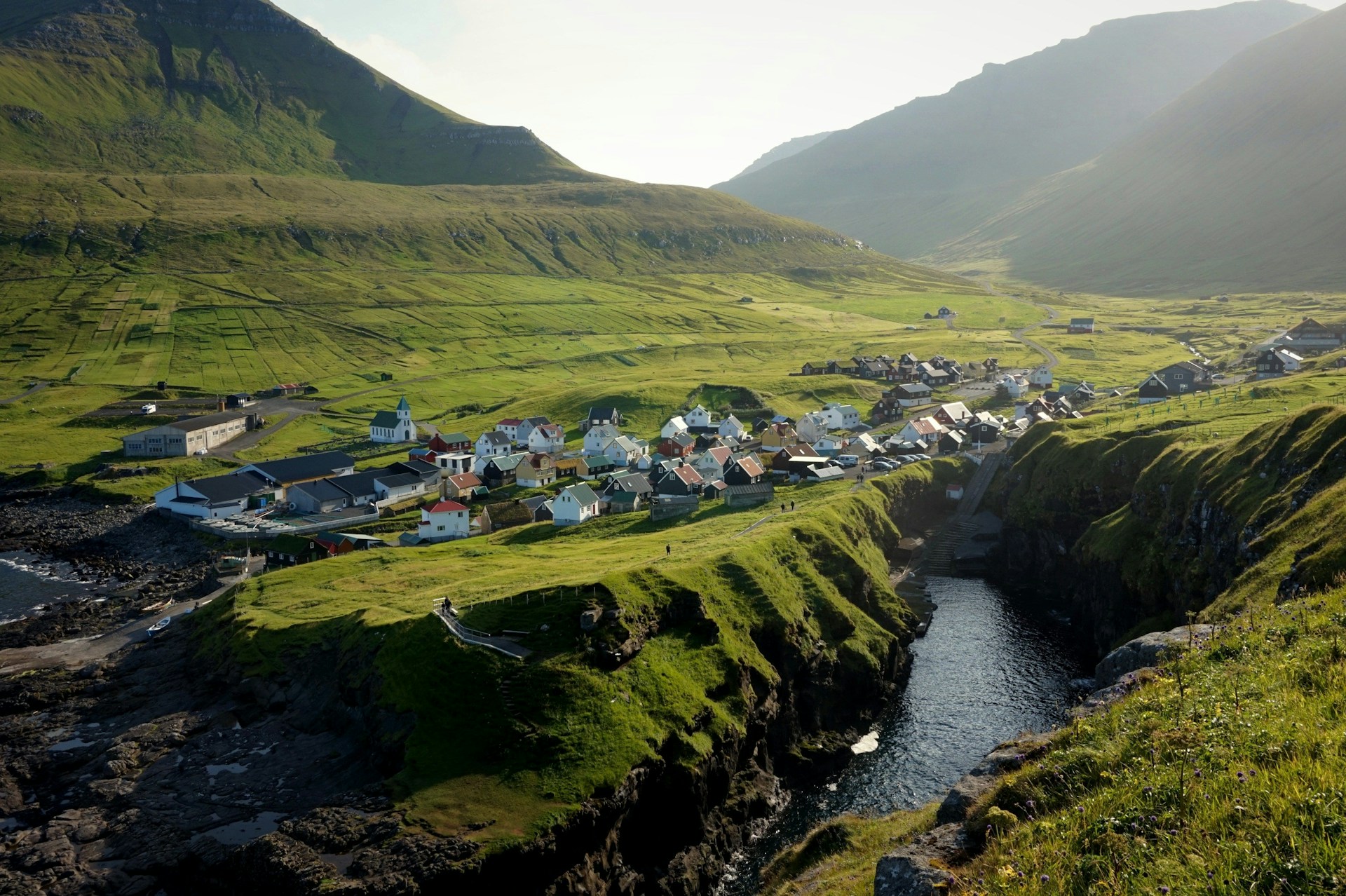
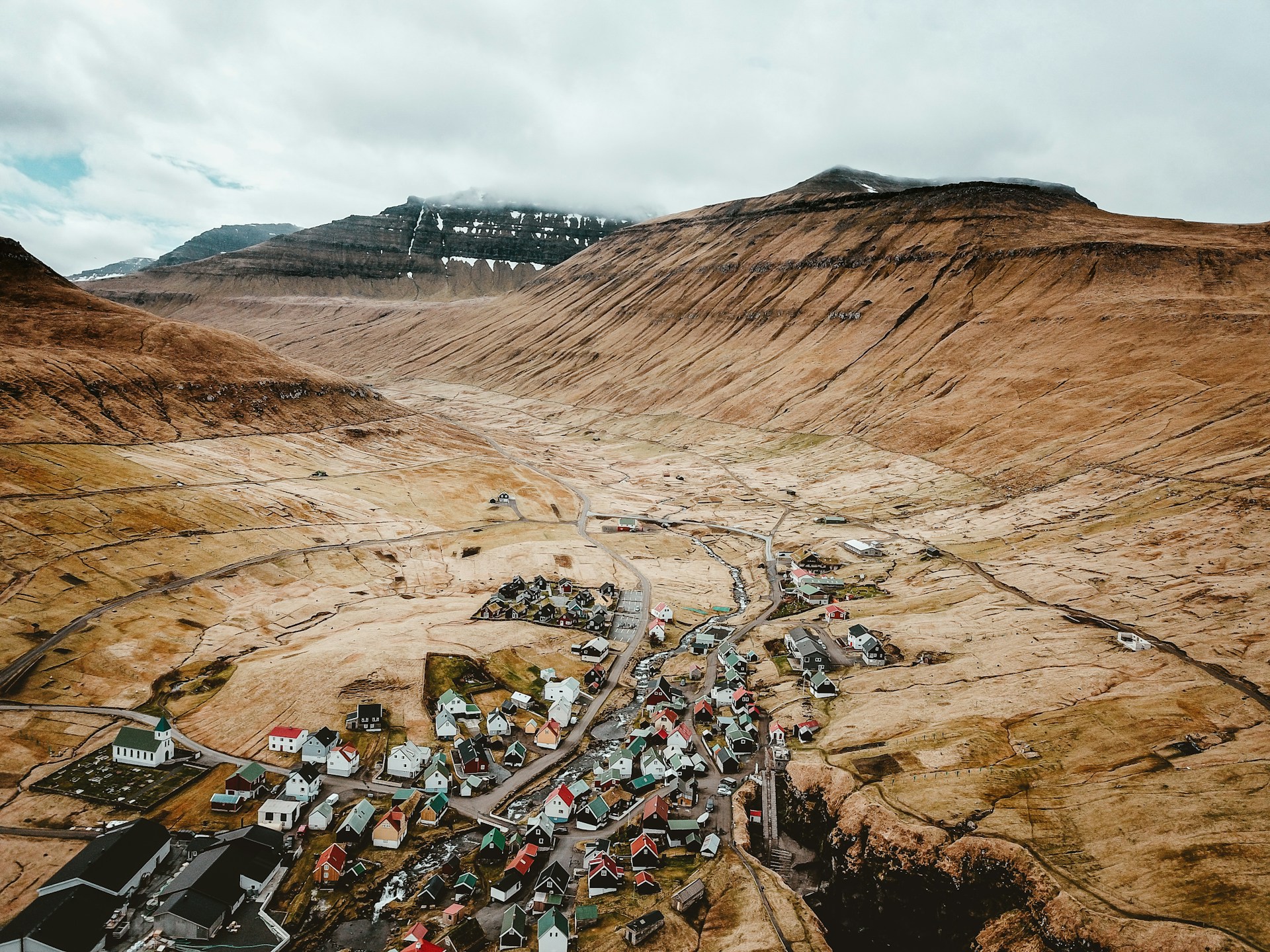
Among the islands’ many iconic spots, few capture the Faroese spirit quite like Gjógv. Home to fewer than 50 residents, this small village on the northeastern tip of Eysturoy is best known for its spectacular sea cliffs and the natural gorge that gave the village its name.
While it may appear to be just another picturesque settlement at first glance, Gjógv has a story that stretches back hundreds of years. Its history is closely tied to the sea, its surroundings are woven into Faroese folklore, and its rugged coastline continues to draw hikers, photographers, and nature lovers from around the world.
A village shaped by a natural harbour
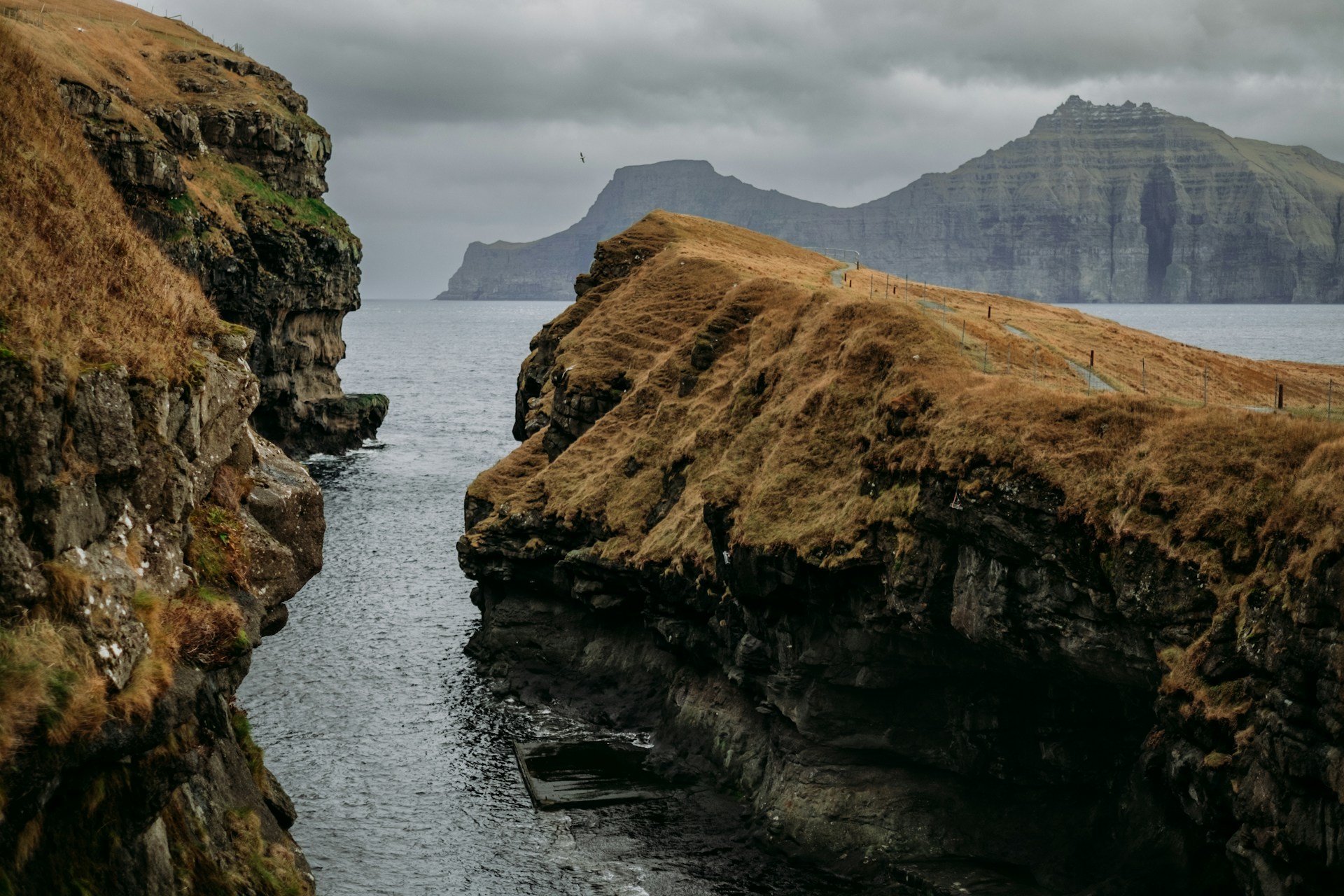
The name Gjógv literally means “gorge” or “cleft” in Faroese, and the village owes both its identity and survival to this unique geological feature. Running almost 200 metres inland from the Atlantic, the narrow sea-filled gorge cuts through the rocky coastline like a giant crack carved by nature over thousands of years.
Long before modern harbours were built elsewhere in the Faroe Islands, this gorge served as a natural harbour for local fishermen. Wooden boats could be pulled safely into the sheltered inlet, protected from the powerful North Atlantic waves that battered the surrounding coastline. Even today, visitors can still see the traditional boat-houses lining the gorge and imagine a time when fishing boats returned here after days at sea.
Fishing has always been the lifeblood of Gjógv. Although life in such an isolated corner of the Faroe Islands was never easy, generations of families built their lives around the sea. The gorge was more than a landmark—it was the village’s connection to the outside world and the reason the settlement flourished here.
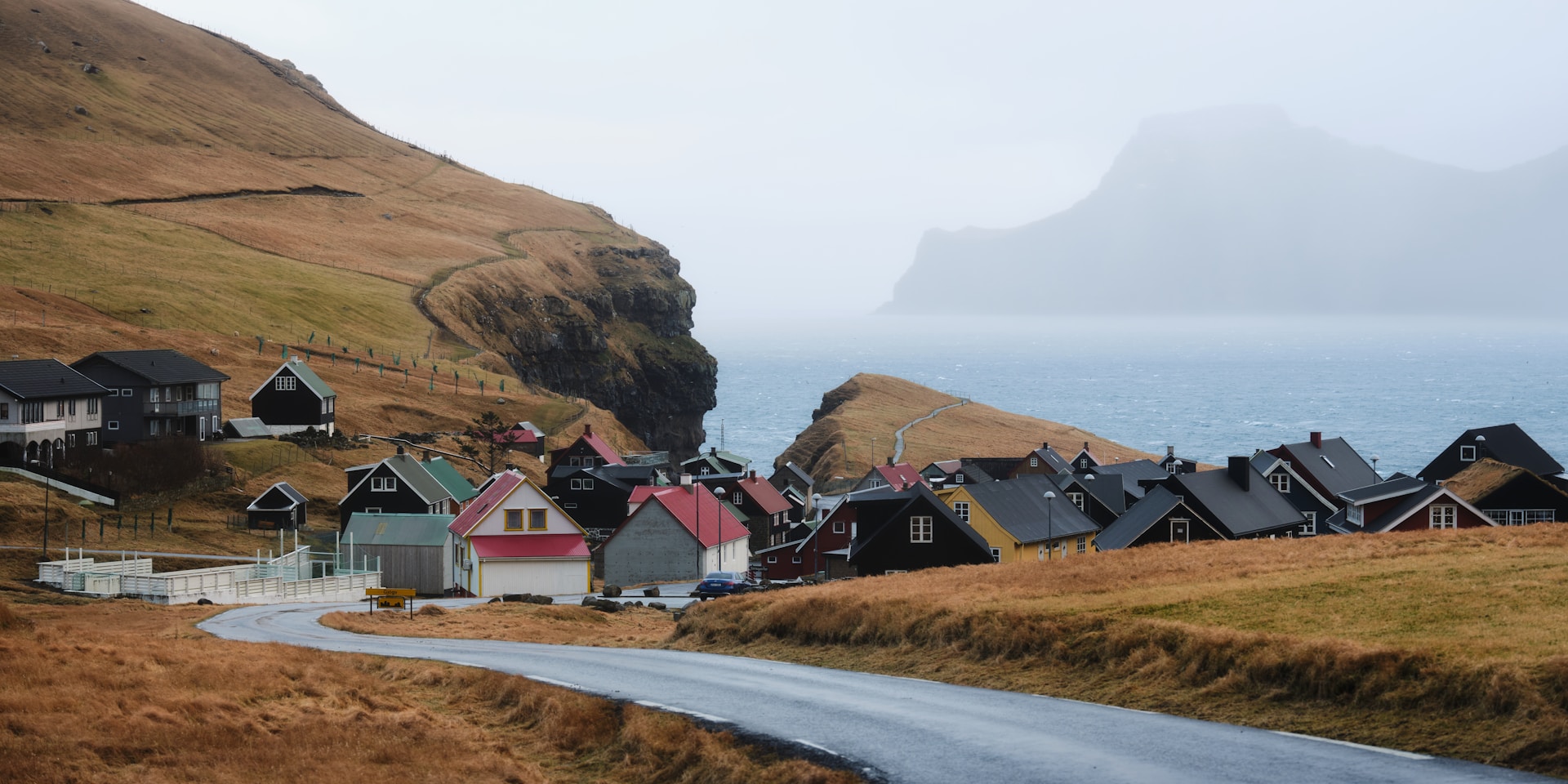
Walking through Gjógv today feels like stepping into a slower pace of life. Colourful wooden houses, neatly kept gardens, and grazing sheep overlook the Atlantic, while narrow roads wind gently through the village. Despite the increase in tourism over the past decade, Gjógv has retained its peaceful character, making it one of the most authentic villages in the Faroe Islands.
Where folklore meets the landscape
Like much of the Faroe Islands, Gjógv is surrounded by landscapes that naturally inspire stories. While there are no widely documented legends that belong exclusively to the village itself, the entire region is steeped in centuries of Faroese folklore.
For generations, islanders believed that mountains, cliffs, and valleys were home to huldufólk, or the “hidden people”—mysterious beings said to live unseen alongside humans. According to local tradition, these supernatural inhabitants could reward those who respected nature and punish those who disturbed their homes. Farmers often avoided moving certain rocks or altering particular hillsides out of respect for these invisible neighbours.
The sea also played a central role in Faroese storytelling. Fishermen spoke of strange creatures beneath the waves, ghostly ships appearing through thick fog and unpredictable storms that arrived without warning. Living on isolated islands surrounded by one of the world’s most powerful oceans, such tales reflected both imagination and a deep respect for nature’s unpredictability.
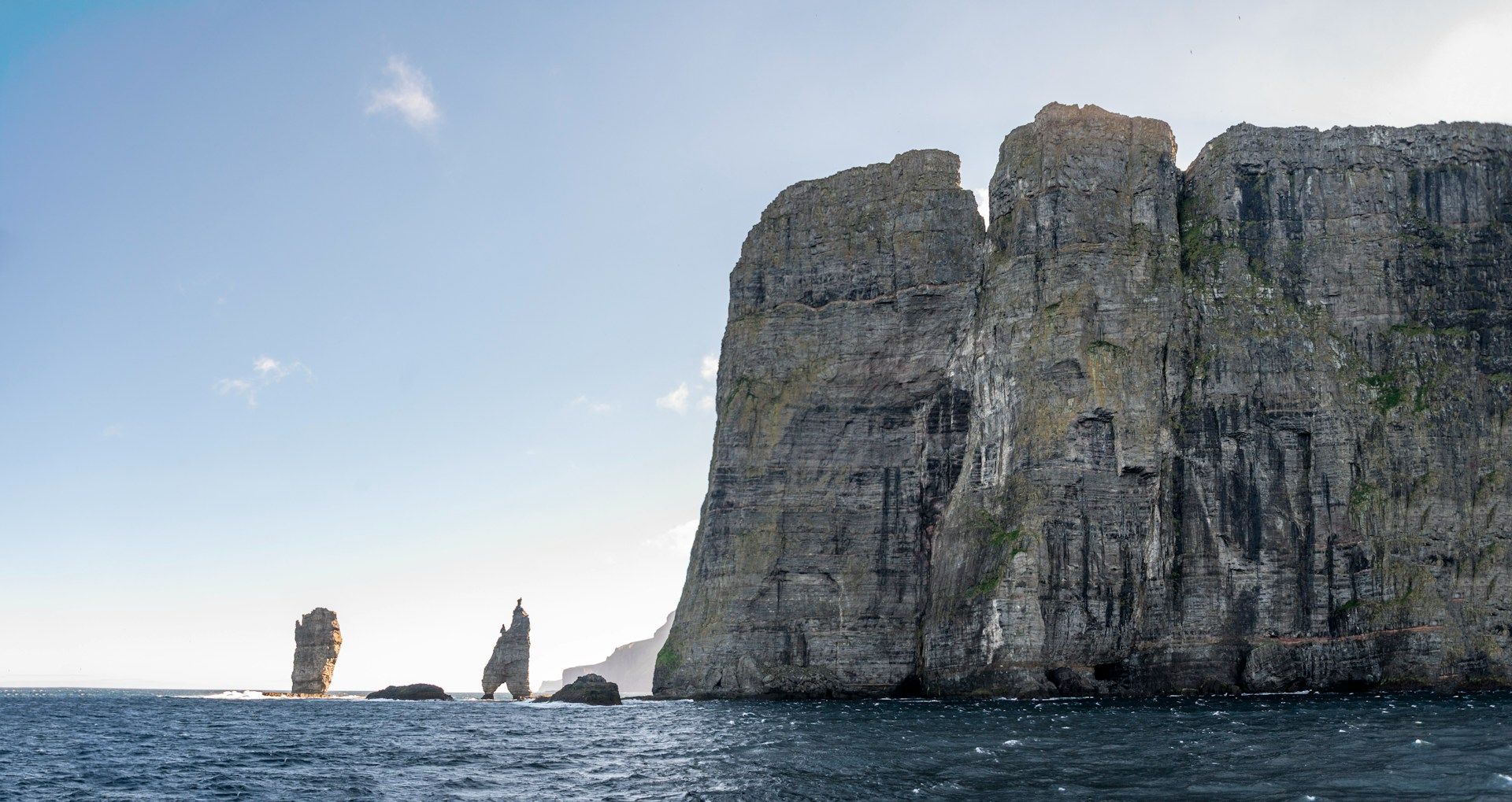
Not far from Gjógv stands one of the Faroe Islands’ most famous legendary landmarks—the sea stacks known as Risin og Kellingin, or The Giant and the Witch. According to legend, an Icelandic giant and an old witch attempted to drag the Faroe Islands back to Iceland using enormous ropes. They worked through the night but failed to move the islands before sunrise. As daylight broke, both were turned to stone, where they are said to remain today, rising from the sea.
Stories like these are part of everyday Faroese culture. Whether one believes them or not, they add another layer to a landscape that already feels mysterious, especially when low clouds drift across the cliffs and waves crash against the rocks below.
The sea cliffs that define Gjógv
While the natural gorge introduces visitors to Gjógv, it is the surrounding sea cliffs that leave the strongest impression.
The village sits on the edge of towering basalt cliffs formed by volcanic activity millions of years ago. Layers of dark rock rise sharply above the Atlantic, creating one of the most stunning coastal landscapes in the Faroe Islands. Depending on the weather, the sea below can appear calm and reflective or transform into a powerful display of crashing waves and swirling foam.
One of the highlights is the view towards Búgvin, a slender sea stack rising nearly 190 metres above the ocean. During the nesting season, thousands of seabirds gather on these cliffs, making the area a paradise for birdwatchers. Puffins are among the best-known residents, but visitors may also spot guillemots, fulmars, kittiwakes, and other seabirds circling overhead or resting on narrow cliff ledges.
The light changes constantly throughout the day. Morning often brings soft mist hanging over the sea, while late afternoon sunlight casts long shadows across the cliffs. Even on cloudy days, the landscape has a beauty that photographers find irresistible.
Unlike many famous viewpoints around the world, there are no barriers separating visitors from nature here. The experience feels raw and untouched, though this also means extra care is essential when walking near cliff edges, particularly during windy conditions.
Walking through one of the Faroes’ finest landscapes
Gjógv is one of the Faroe Islands’ best destinations for walking and hiking. Some visitors simply stroll through the village before following the path to the gorge, while others spend an entire day exploring the surrounding mountains.
A well-marked trail leads from the village towards Ambadalur Valley, one of the region’s most popular hikes. The route climbs steadily above the coastline, opening up spectacular views of the gorge, Búgvin sea stack and the endless Atlantic beyond. On clear days, the scenery stretches for miles across the surrounding islands.
Experienced hikers often combine a visit to Gjógv with a climb up Slættaratindur, the highest mountain in the Faroe Islands standing at 880 metres. Although the ascent requires reasonable fitness, the summit offers panoramic views across much of the archipelago when weather conditions are favourable.
For travellers who prefer gentler walks, simply wandering around Gjógv is equally rewarding. Small footpaths connect different parts of the village, leading past old houses, grazing sheep, and quiet viewpoints where the only sounds are birds calling overhead and waves rolling into the gorge.
More than a photographer’s dream
It is easy to see why Gjógv has become a favourite among photographers. Every season offers something different.
Spring brings carpets of wildflowers and the return of seabirds to the cliffs. Summer provides long daylight hours, allowing visitors to explore well into the evening under the soft northern light. Autumn paints the hillsides in warm earthy tones, while winter transforms the coastline into a spectacle of crashing waves and shifting weather.
However, photography is not the only reason why people come here.
Many visitors simply sit near the gorge, watching fishing boats come and go. Others spend time observing seabirds or enjoying the quiet that is increasingly difficult to find elsewhere in Europe. There are no shopping streets, amusement parks or busy nightlife. The attraction lies in slowing down and appreciating a landscape that has changed very little over centuries.
Exploring beyond Gjógv
Although Gjógv deserves far more than a quick stop, it also fits naturally into a wider journey across Eysturoy.
The nearby village of Funningur is considered one of the oldest settlements in the Faroe Islands and is home to a beautiful black-tarred wooden church overlooking the fjord. Just a short drive away, Eiði offers sweeping coastal views and serves as one of the best places to see the Giant and the Witch sea stacks from the shore.
Many travellers also continue towards Tjørnuvík, another beautiful village known for its black-sand beach and mountain backdrop. Together, these destinations showcase the variety of landscapes that have made the Faroe Islands increasingly popular with outdoor enthusiasts.
Planning a visit
The village of Gjógv lies about an hour’s drive from Tórshavn, the Faroese capital, along well-maintained roads that wind through mountains and valleys. The journey itself is part of the experience, with every turn revealing new views of fjords, waterfalls, and grazing hillsides.
Public buses also connect Gjógv with other parts of the islands, although services are limited compared to travelling by car. Many visitors choose to rent a vehicle, allowing them to explore nearby villages at their own pace.
The best time to visit is between May and September, when the days are longer, hiking trails are generally more accessible and seabird habitats are at their busiest. Summer is also the ideal season for spotting puffins. Even then, travellers should be prepared for rapidly changing weather. Sunshine, fog, rain, and strong winds can all arrive within the same afternoon, so waterproof clothing and sturdy walking shoes are essential.
While Gjógv is often visited as a day trip, spending a night in the village offers a completely different experience. As evening falls and most visitors leave, the village becomes wonderfully quiet. The sound of waves echoing through the gorge, the calls of seabirds overhead and the fading light over the Atlantic create an atmosphere that lingers long after the journey ends.