Indian cuisine is a misnomer. Every region of the country brings something different to the table, shaped by its geography, climate, history, local produce and the diverse communities. From the mustard fields of Punjab and the royal kitchens of Lucknow to the coconut-rich shores of Kerala and the hills of the Northeast, India’s food traditions are as varied as its landscapes.
Yet, when Indian cuisine is discussed beyond the country, the conversation often circles back to dal makhani, butter chicken, naan and paneer tikka. These dishes have earned their popularity, but they represent only a small part of a much larger culinary story.
It’s time to look beyond the familiar and discover other regional specialities that offer a taste of India’s extraordinary culinary heritage.
1. Amritsari Fish, Punjab
Punjab’s food culture is often associated with rich gravies, tandoori cooking and generous servings of butter and ghee. But in Amritsar, one of its most tempting dishes comes in a crisp, golden package: Amritsari fish.
Typically made with freshwater fish, it features pieces marinated in spices, ginger, garlic and ajwain, then coated in a gram-flour batter and fried until the outside turns crunchy while the flesh remains soft and flaky. A squeeze of lemon adds a refreshing sharpness, cutting through the richness of the fried coating.
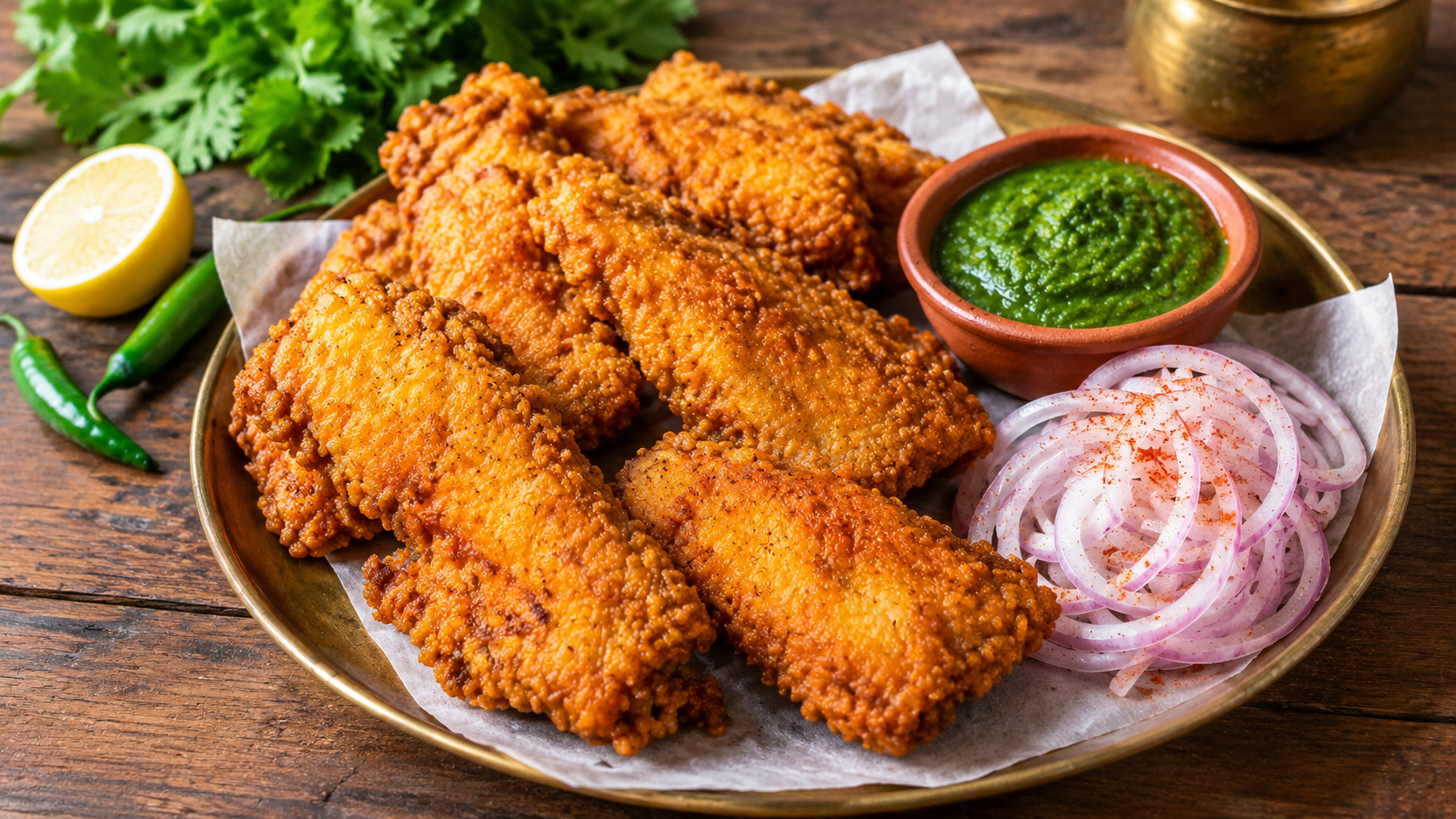
The beauty lies in the contrast between the crisp exterior and tender fish inside. The spices lend warmth without necessarily overwhelming the delicate flavour of the fish. Served hot, often with chutney and onion rings, it is a favourite at Amritsar’s street-food stalls and local eateries. The dish has grown into a recognisable regional speciality, offering a different side of Punjabi cooking from its better-known tandoori items.
2. Laal Maas, Rajasthan
Rajasthan’s arid landscape has played an important role in shaping its cuisine, encouraging cooks to make inventive use of ingredients that could be stored and preserved. However, the state’s cuisine also includes elaborate preparations associated with royal households. Laal maas is one such dish.
This deep-red mutton curry is traditionally prepared with red chillies, yoghurt and a blend of spices. The meat is cooked until tender, absorbing the flavours of the gravy, while the chillies lend it its characteristic heat and colour. Depending on the recipe, garlic and other aromatics add further depth.
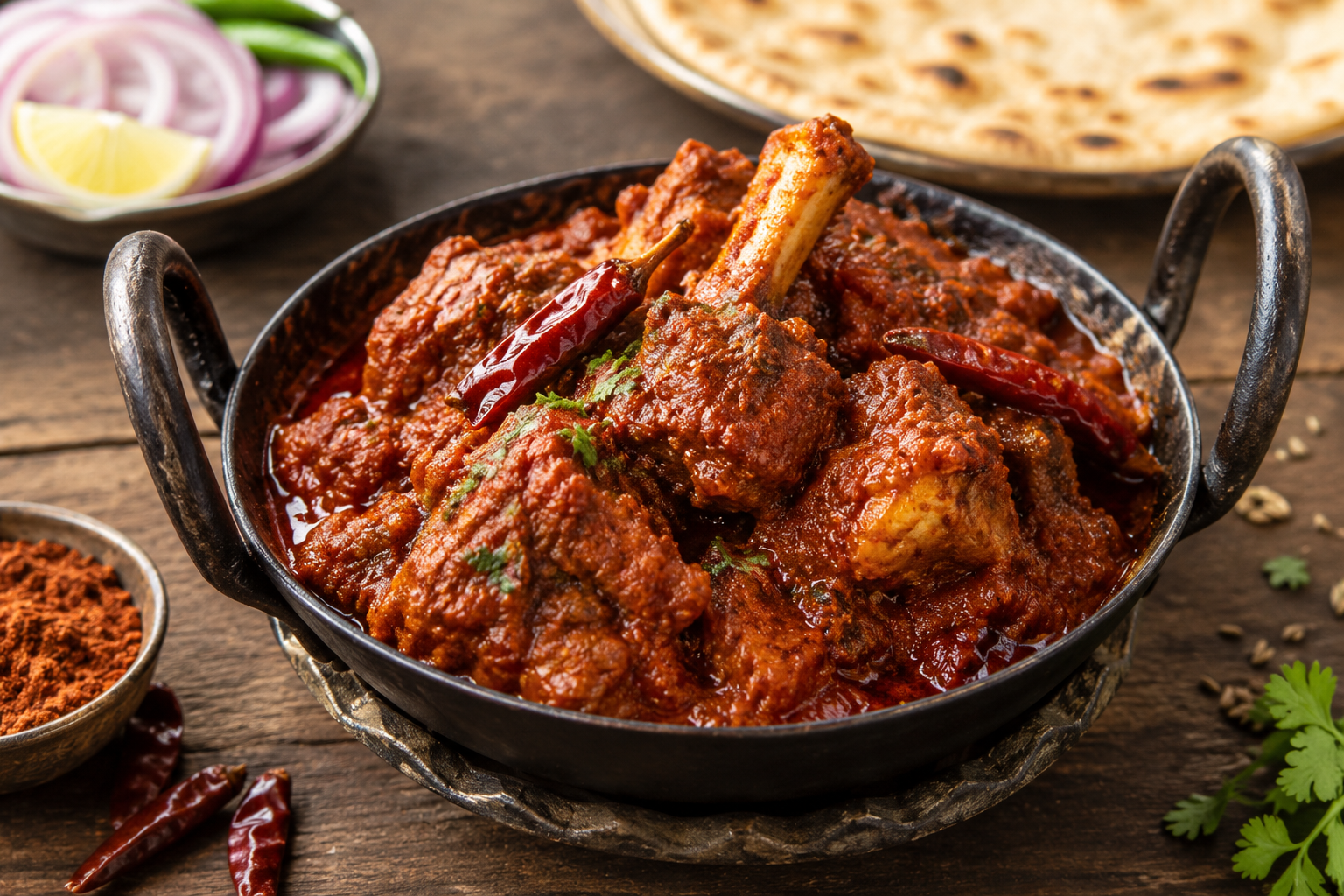
The richness of the meat, the tang of yoghurt and the earthy warmth of the spices work together to give laal maas its fiery reputation. Traditionally associated with Rajasthan’s royal and hunting-food traditions, it is often served with rotis or rice, which help balance the intensity of the curry.
For anyone who enjoys robust meat dishes, laal maas offers a chance to experience a particularly bold side of Rajasthani cuisine.
3. Galouti Kebab, Lucknow
Lucknow’s Awadhi cuisine is celebrated for its refinement, aromatic spices and meticulous cooking techniques. Few dishes capture this approach as memorably as the Galouti kebab.
Made with finely minced meat, traditionally mutton, the mixture is seasoned with an elaborate blend of spices and often tenderised with raw papaya. It is shaped into small patties and cooked gently on a griddle. The result is remarkably soft, with a delicate crust giving way to a smooth, almost buttery interior.
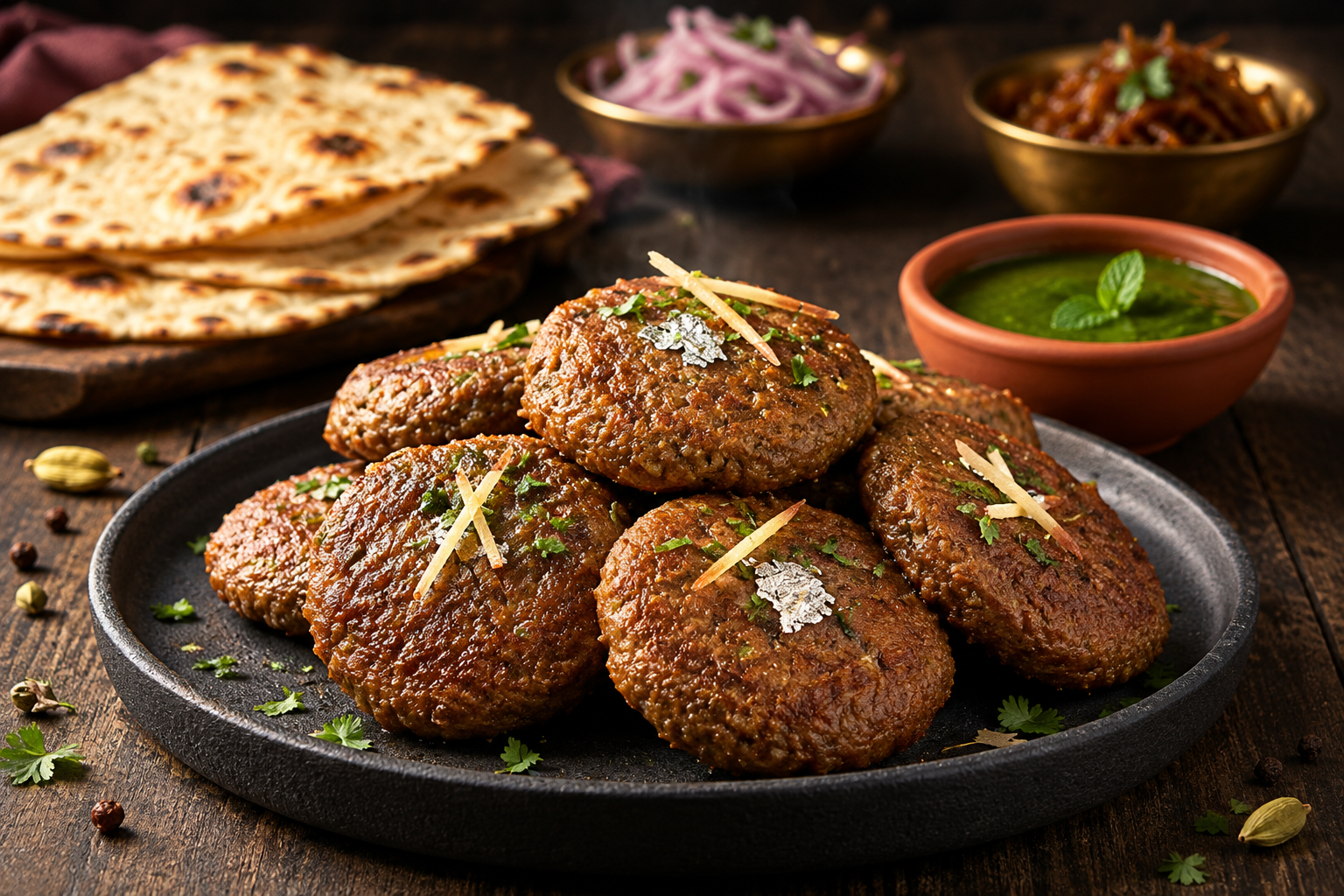
A popular story links the kebab to an ageing Nawab who loved kebabs but found chewing increasingly difficult. His cooks are said to have developed an exceptionally tender preparation for him. Although the details belong partly to culinary legend, the story captures the ingenuity associated with Lucknow’s royal kitchens.
Unlike a firm, smoky seekh kebab, a galouti is prized for its near-melting texture and fragrant seasoning. It is often paired with a thin roomali roti or a lightly crisp paratha.
4. Daab Chingri, Bengal
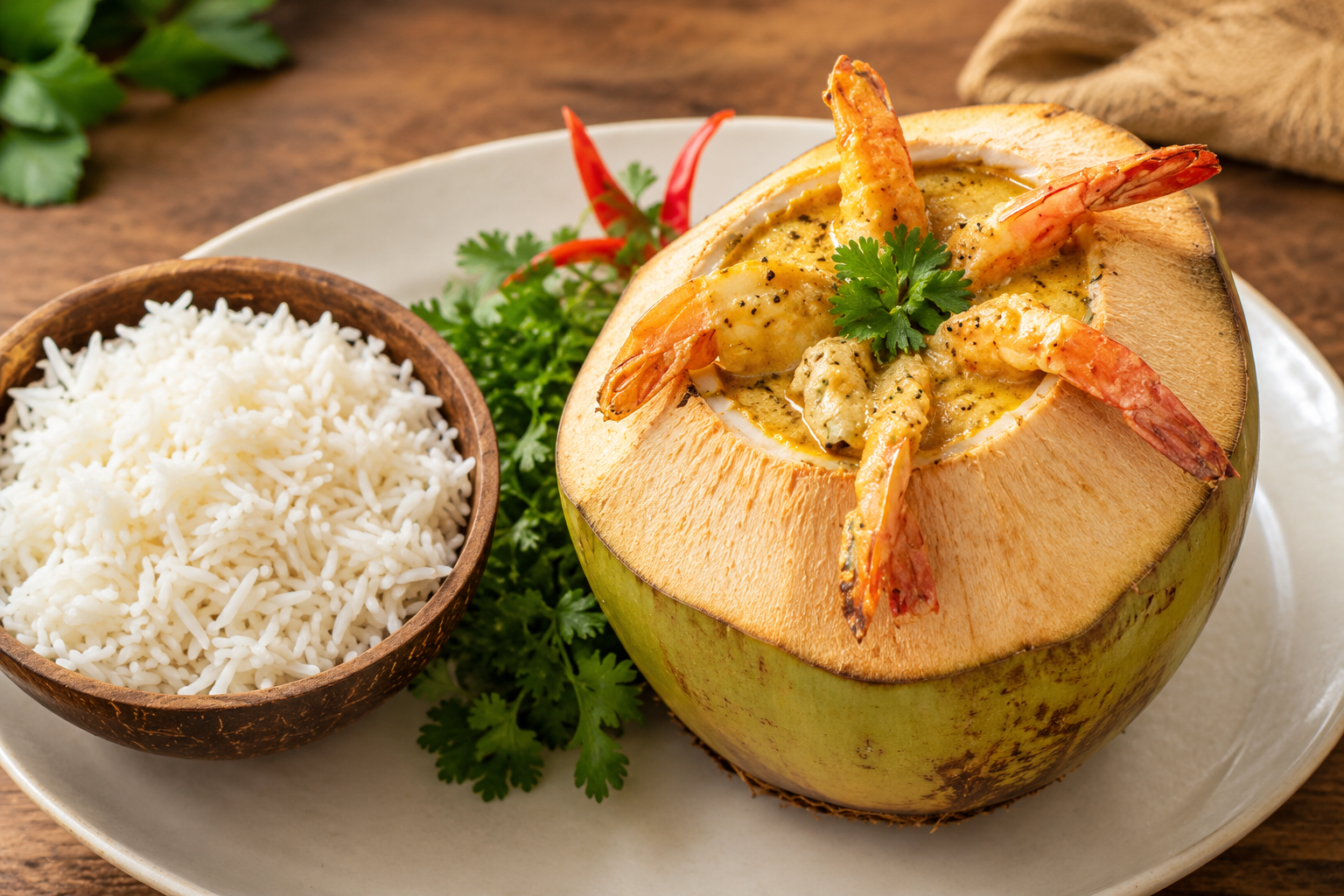
Bengali cuisine has a special relationship with fish and prawns, but its cooking is far more varied than the familiar fish curry. Daab chingri boasts a unique example, combining freshwater prawns with the gentle sweetness of tender coconut.
The preparation involves filling a green coconut with prawns marinated in ingredients such as mustard paste, green chillies, coconut and mustard oil. The opening is sealed, and the coconut is cooked so that the flavours mingle within. When it arrives at the table, the coconut itself becomes part of the presentation, holding a fragrant, creamy sauce around the plump prawns.
The flavour is delightfully balanced. Mustard brings pungency and a gentle bite, while coconut softens its intensity with a mild sweetness. The prawns contribute their natural sweetness, making every spoonful rich without necessarily feeling heavy.
Although coconut and prawns have long featured in Bengali cooking, daab chingri has earned a special place as a restaurant favourite. Its preparation requires care, while the use of a tender coconut gives the dish a distinctive aroma and an eye-catching presentation. It is a fine example of how Bengali cuisine can turn familiar ingredients into something memorable.
5. Masor Tenga, Assam
In Assam, where rivers and freshwater resources have shaped everyday eating habits, fish holds an important place on the dining table. One of the region’s best-loved preparations is masor tenga, a light, sour fish curry that offers a refreshing contrast to richer gravies.
The dish is usually made with freshwater fish, often rohu, simmered in a thin broth flavoured with tomatoes or other souring ingredients. Depending on the household and season, cooks may use thekera, elephant apple, lemon or raw mango. The seasoning is generally restrained, allowing the sourness and the flavour of the fish to take centre stage.
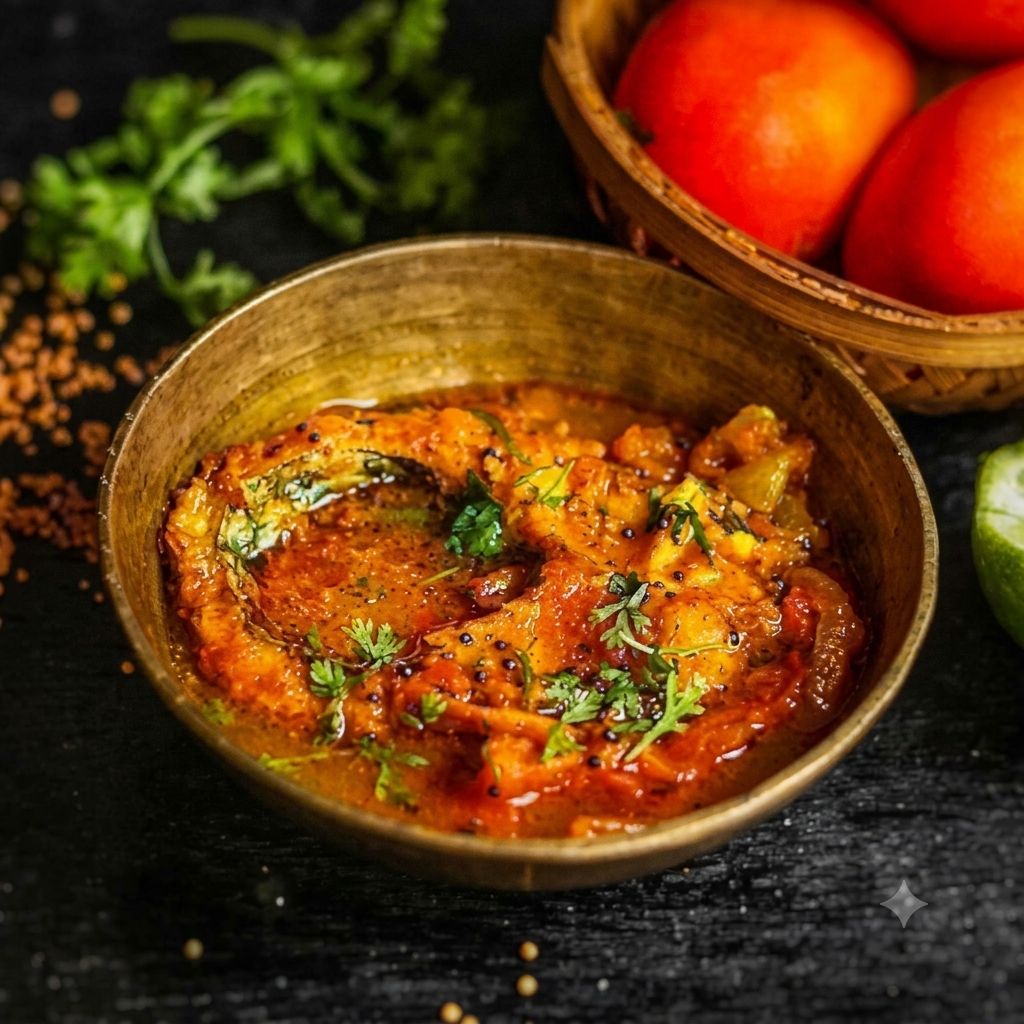
The result is delicate rather than fiery: tangy, smooth and light on the palate. It is commonly eaten with steamed rice, and its refreshing character makes it especially appealing in Assam’s warm climate.
Masor tenga also reflects a broader feature of Assamese meals, in which sour recipes have a distinct place alongside dishes such as khar, an alkaline preparation. Rather than relying on thick gravies or elaborate spice blends, this curry shows how a handful of local ingredients can create a dish with a distinctive identity.
6. Thalassery Biryani, Kerala
Biryani has many regional identities in India, and Kerala’s Malabar coast has developed a version that stands apart from the familiar long-grain preparations of other regions. Thalassery biryani, from the northern Kerala town of Thalassery, is known for its fragrant short-grain rice, often called kaima or jeerakasala.
Unlike biryanis made with long, slender basmati rice, this version uses small, aromatic grains that absorb flavour while retaining their character. Meat, usually chicken or mutton, is cooked with spices, onions and aromatics, then combined with the rice. Fried onions, ghee, herbs and sometimes nuts or raisins add further layers of flavour.
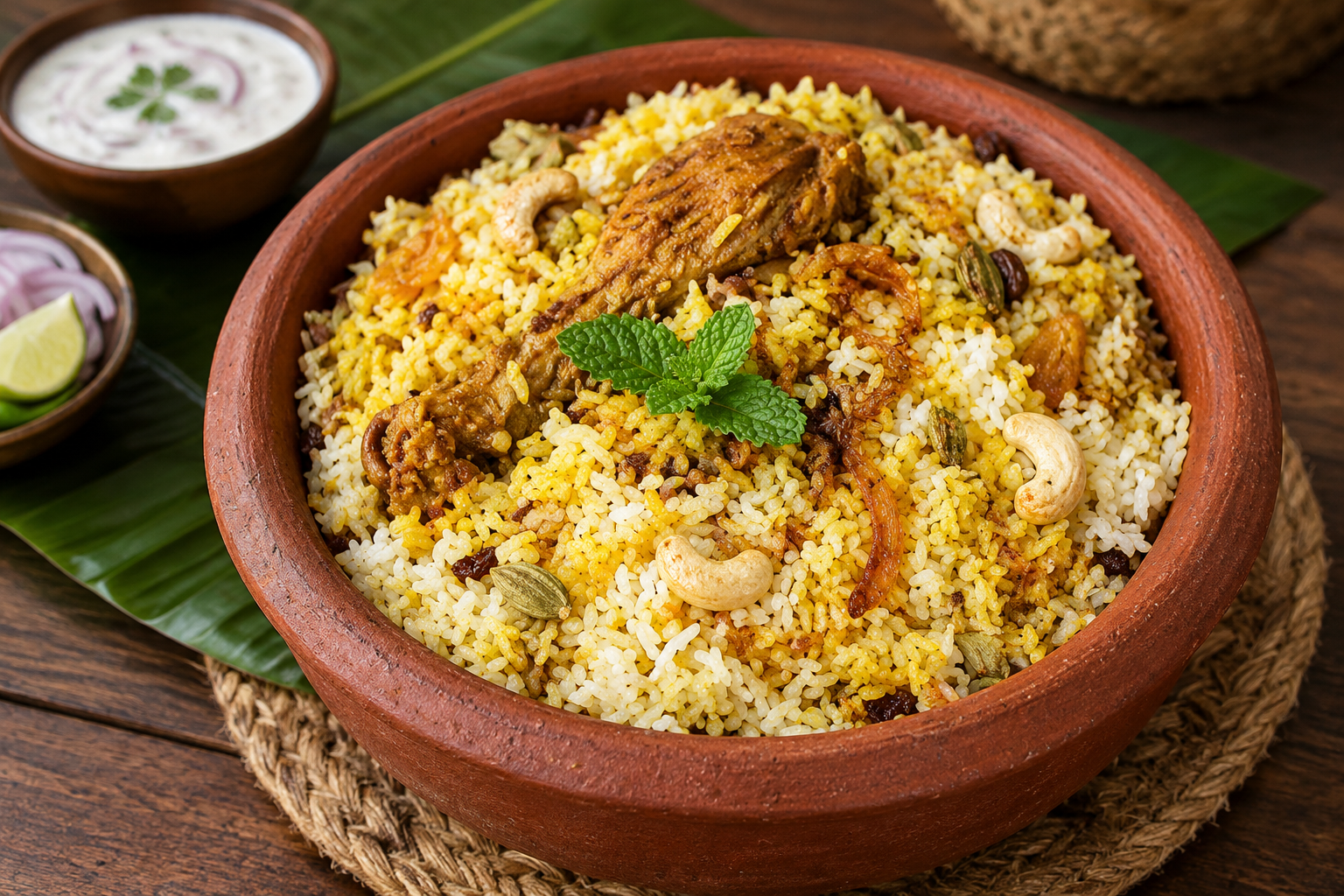
The biryani is rich and fragrant, but its character comes from intense mixing of the rice, meat and seasoning rather than an overpowering masala. It is often cooked using the dum method, with the vessel sealed to allow the ingredients to finish cooking together.
Malabar cuisine reflects centuries of interaction between local communities and overseas traders, particularly through Indian Ocean trade. Arab influences, alongside regional traditions, helped shape its distinctive culinary culture. Thalassery biryani is a delicious expression of that history, with a personality quite different from its counterparts elsewhere in India.
7. Smoked Pork with Bamboo Shoot, Nagaland
The cuisines of Northeast India deserve far greater attention in conversations about Indian food. In Nagaland, smoking, fermenting and preserving ingredients are important culinary traditions, and pork cooked with bamboo shoot offers a vivid introduction to these flavours.
Pork is often smoked over a hearth, developing a deep, earthy aroma and a firmer texture. It is then cooked with bamboo shoot, which may be fermented, adding a sharp, distinctive tang. Depending on the community and recipe, garlic, chillies and local ingredients are also used.
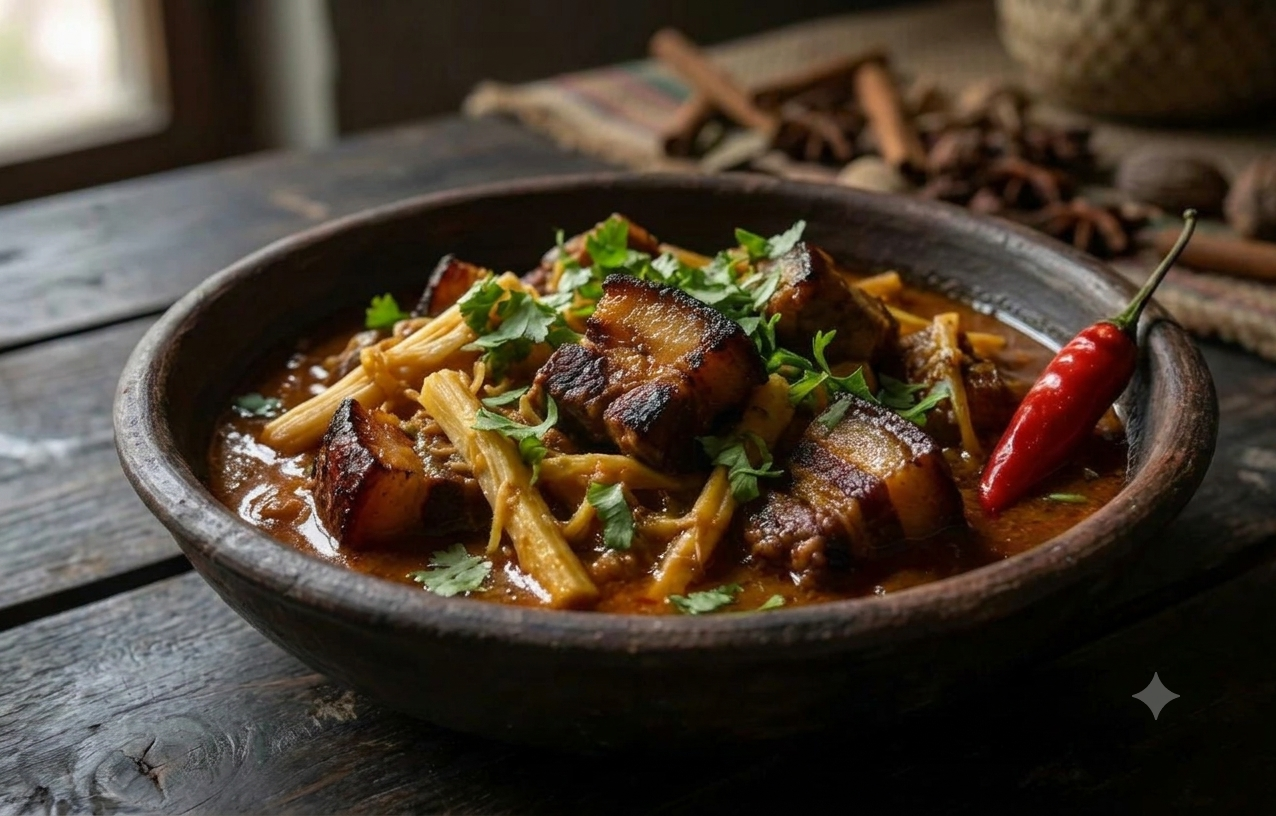
The combination is striking. Rich pork, smoky tinge and the sourness of bamboo shoot come together in a dish that is full of character. Some versions incorporate raja mircha, the famously fiery Naga chilli, although the level of heat varies.
Smoking was traditionally used to preserve meat before refrigeration was widely available, but over time it became a defining feature of Naga cooking. Served with rice, smoked pork with bamboo shoot is a reminder that Indian cuisine extends well beyond its mainstream favourites.
8. Ker Sangri, Rajasthan
Not every memorable Indian dish depends on meat, dairy or a long list of spices. Ker sangri, a traditional Rajasthani preparation, celebrates two ingredients closely associated with the state’s dry landscape: ker, a small desert berry, and sangri, the pods of the khejri tree.
These ingredients are typically dried and stored, then soaked and cooked with spices, oil and chillies. The resulting preparation is often served as a sabzi or accompaniment to rotis. Its flavour is distinctive: earthy and savoury, with the ker lending a tart note that balances the sangri’s more substantial texture.
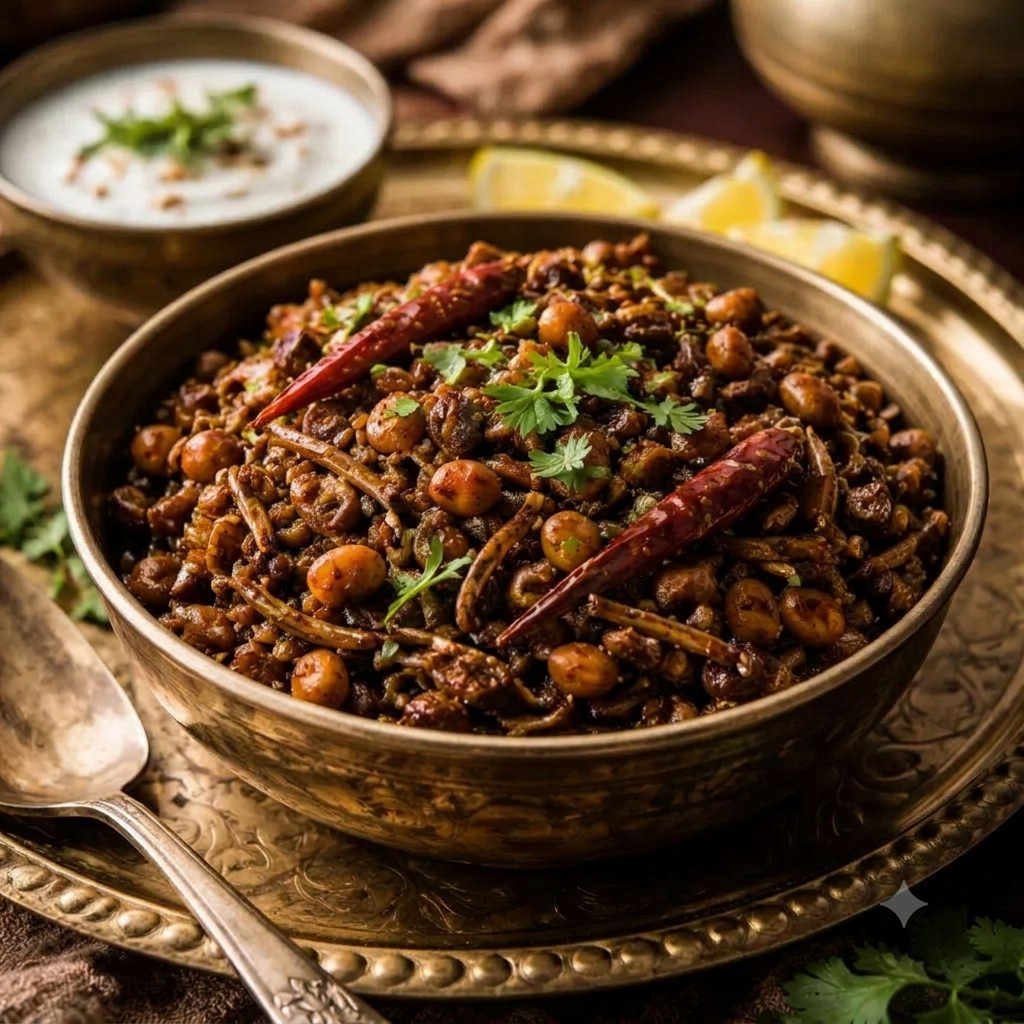
The dish reflects the resourcefulness of desert cooking. In a region where fresh vegetables could be difficult to obtain, locally available plants that survived harsh conditions became valuable sources of food. Drying also made them easier to store for later use.
Today, ker sangri is prized not only for its connection to Rajasthan’s landscape but also for its distinctive taste. It is often associated with traditional Marwari cooking and festive meals, showing how local ingredients can become the defining feature of a region’s cuisine.
9. Appam with Ishtu, Kerala
Kerala’s food traditions bring together rice, coconut, seafood, spices and a variety of cooking techniques. One of the most comforting combinations is appam with ishtu, a pairing of soft, lacy rice pancakes and a gently spiced stew.
Appams are made from a fermented batter, traditionally based on rice and often coconut. Cooked in a small, rounded pan, they develop delicate, crisp edges and a soft, slightly spongy centre. The fermentation gives them a subtle tang, while the coconut lends a mild sweetness.
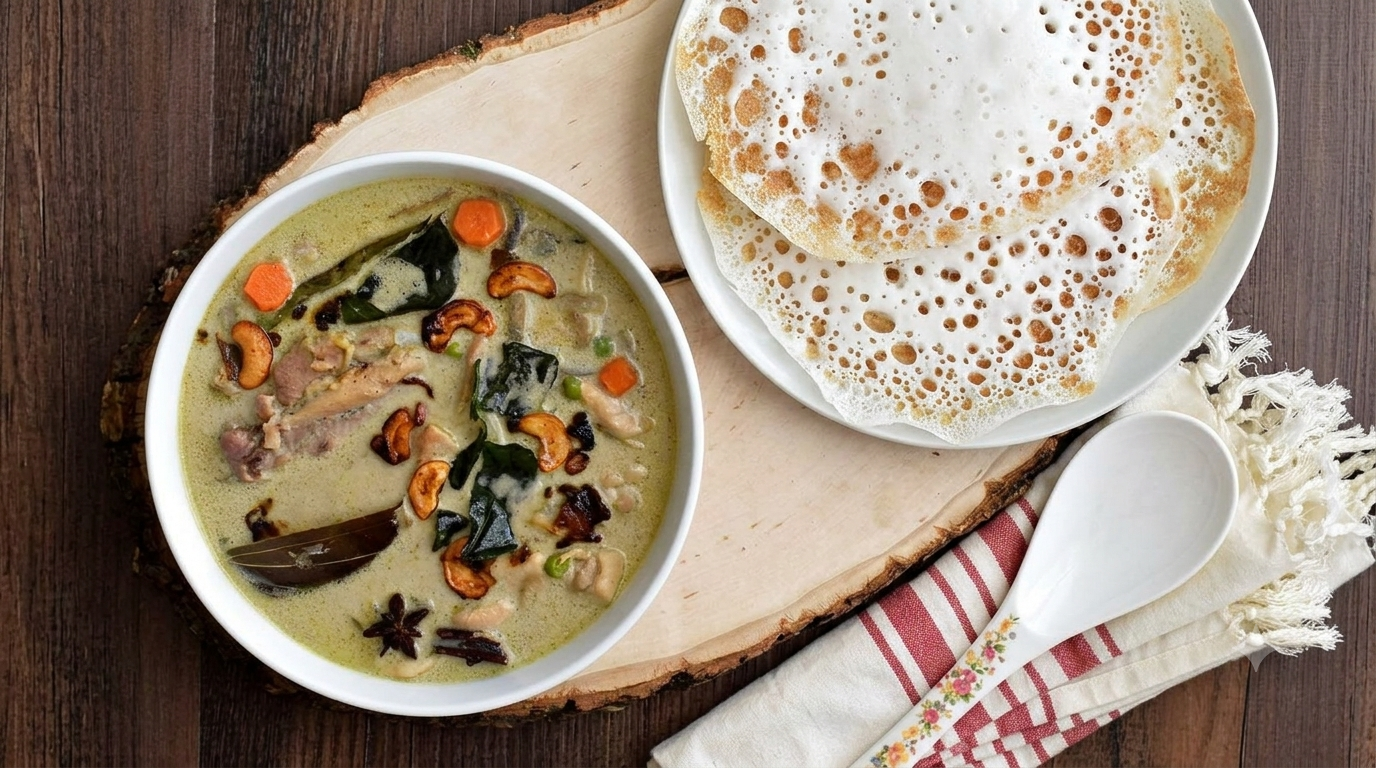
Ishtu, or stew, is usually prepared with vegetables, chicken or mutton simmered in coconut milk. Unlike fiery curries, it is mild and aromatic, often seasoned with whole spices, ginger, green chillies and curry leaves. The creamy gravy soaks into the appam’s soft centre, while its crisp edges provide a pleasing contrast.
The combination is particularly associated with Kerala’s Syrian Christian food traditions, although appam and stew have become popular well beyond individual communities. Together, they show that Kerala cuisine is not defined by bold spices alone – subtle flavours, texture and the gentle richness of coconut can be just as compelling.
10. Rosogolla, Bengal
A journey through India’s regional food traditions would be incomplete without dessert, and Bengal offers one of the country’s most recognisable sweets – the rosogolla.
Made from chhena, or fresh curdled milk solids, the sweet is shaped into smooth balls and cooked in sugar syrup until they become soft, spongy and saturated with sweetness. A well-made rosogolla springs back gently when pressed and releases syrup as it is bitten into. Its appeal lies in its simplicity: a delicate milky flavour, a light texture and a sweetness that does not need elaborate decoration.
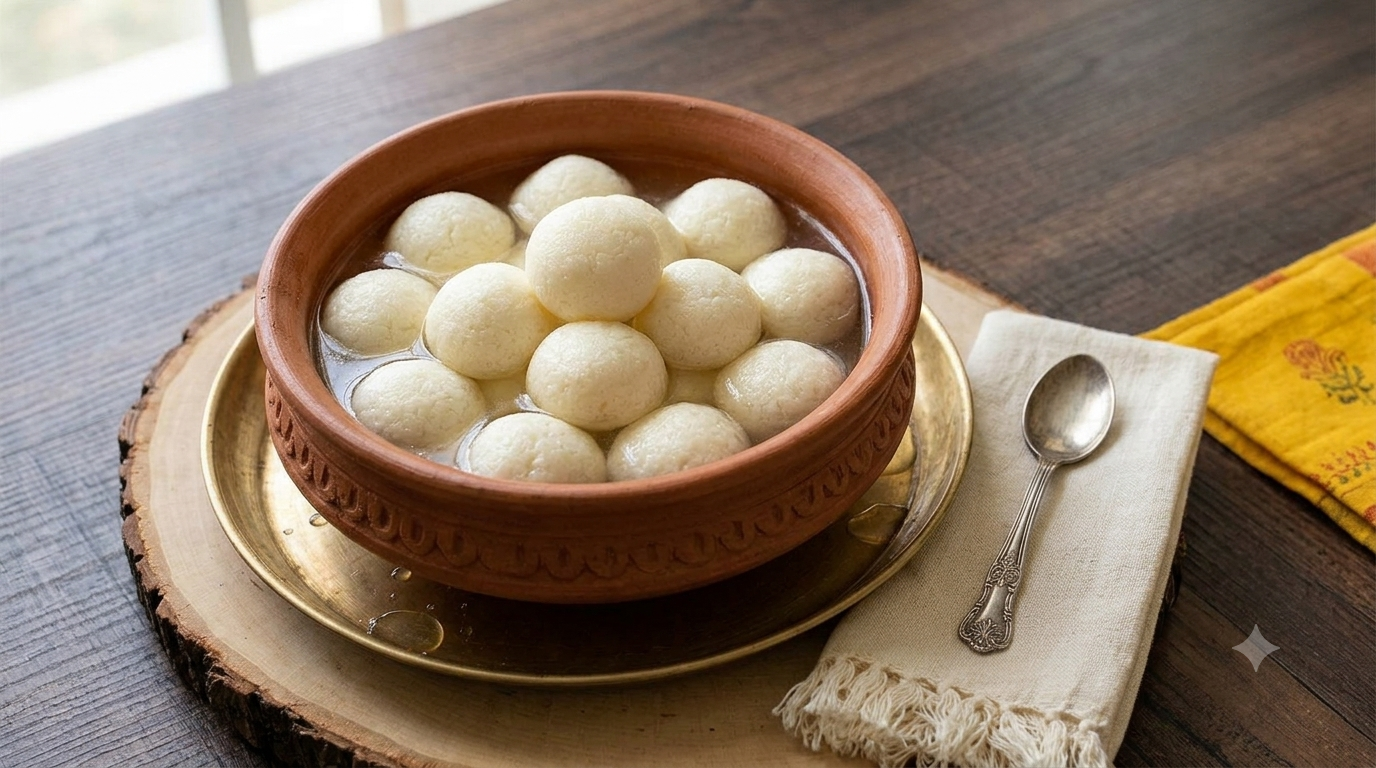
The Bengali rosogolla is widely associated with Kolkata confectioner Nobin Chandra Das, who is credited in popular accounts with perfecting the sweet in the nineteenth century. Its history, however, is part of a larger and still-debated story, as Odisha also has a longstanding tradition of rasagola associated with religious offerings. West Bengal received a geographical indication (GI Tag) for Banglar Rosogolla in 2017, recognising the state’s particular version rather than settling every question about the broader sweet’s origins.
Rosogolla’s journey from local sweet shops to celebrations and dining tables reflects the enduring appeal of regional craftsmanship. It is a fitting finale to a culinary exploration that celebrates the variety of Indian food.
So, next time when Indian cuisine comes to your mind, look beyond dal makhani and butter chicken! There is a much bigger, richer and more surprising culinary map waiting to be explored.