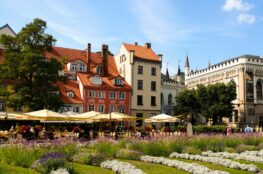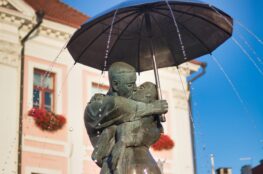

Warsaw can surprise you. At first glance, the Polish capital may look like a modern European city, with a skyline of glass towers, busy streets, and a fast-moving urban rhythm. Then you turn a corner and find yourself in a cobbled square surrounded by colourful townhouses, walk along a medieval-looking street or enter a royal palace. Look a little closer, and you may discover a totally different side of Warsaw — one shaped by war, destruction, resilience, and an extraordinary effort to rebuild what had been almost completely lost.
That story is especially visible in the Old Town, the historic heart of Warsaw and one of the city’s biggest attractions. But there is much more to the city than its postcard-perfect historic centre. There are royal residences and grand avenues, museums that delve deep into Poland’s complicated past, leafy parks, contemporary neighbourhoods, riverside paths, and a food scene that makes you fall in love with Polish cuisine.
Start with the Old Town
The best place to begin your tour is Warsaw’s Old Town (Stare Miasto). Its colourful facades, narrow streets, little squares, and outdoor cafés make it an easy place to wander without a plan. At the centre is the Old Town Market Square, laid out around the turn of the 13th and 14th centuries and still one of the most atmospheric places in the city. The Warsaw Mermaid, holding a sword and shield, stands at its centre and has become one of the city’s best-known symbols.
But the prettiness of the Old Town hides an extraordinary story.
More than 85 percent of Warsaw’s historic centre was destroyed during the Second World War, particularly during and after the Warsaw Uprising of 1944. After the war, residents, architects, conservators, and historians set about rebuilding it. The reconstruction was based on old drawings, paintings, photographs, architectural records and whatever fragments had survived. Much of the work followed the appearance of the historic city before its destruction.

That is why walking through the Old Town is such a fascinating experience. It is historic, but much of what you see is reconstructed. The achievement was so remarkable that Warsaw’s Historic Centre was inscribed on the UNESCO World Heritage List in 1980. UNESCO describes it as an exceptional example of the near-total reconstruction of a historic urban centre.
Give yourself time here and walk through the Market Square, follow the old city walls, and explore the Warsaw Barbican – a distinctive brick gateway and defensive fortification dating back to the 16th century. Then continue to wander along the small streets around Kanonia, a tiny historic square tucked behind St John’s Cathedral, known for its narrow old houses and the city’s famous Wishing Bell.
St John’s Cathedral, with its long history and association with important Polish figures and events, is another important stop.
Then come out towards Castle Square, where the red-brick Royal Castle dominates the scene and the tall Sigismund’s Column provides one of Warsaw’s most recognisable landmarks. King Sigismund III Vasa moved the capital from Kraków to Warsaw in the late 16th century, helping to shape the city’s role as the political centre of Poland.

Once the residence of Polish rulers, the Royal Castle contains royal apartments, historic interiors and an art collection that includes works associated with artists such as Rembrandt and Canaletto.
For one of the best views over the historic centre, climb the bell tower of St Anne’s Church near Castle Square. The view takes in the Old Town, the river and the newer parts of Warsaw beyond it.
Walk the Royal Route
Warsaw is particularly rewarding on foot because several of its major sights naturally connect with one another.
The Royal Route is the city’s grand historic spine, linking the Royal Castle with other former royal residences. From Castle Square, walk along Krakowskie Przedmieście and Nowy Świat, passing churches, palaces, the Presidential Palace, Warsaw University and elegant historic buildings along the way. Eventually, the route leads towards the green expanses of Royal Łazienki Park and further south to Wilanów Palace.
Łazienki deserves more than a quick stop. The huge park combines landscaped gardens, ponds, monuments and historic buildings, including the Palace on the Isle, the Old Orangery and an amphitheatre. It was the summer residence of Poland’s last king, Stanisław August, and reflects his interest in art, culture, and the ideas of the Enlightenment.

There is also a musical connection here. The monument to Frédéric Chopin, Poland’s most famous composer, stands among the park’s greenery. During summer, the area traditionally hosts open-air Chopin concerts, making this one of those Warsaw experiences that combines music, history, and the city’s love of its parks.
Further along the Royal Route is Wilanów Palace, the former royal residence surrounded by gardens. Its architecture and setting offer a very different picture of Warsaw from the medieval streets of the Old Town.
Warsaw’s history is everywhere
To understand the city properly, it is worth moving beyond the royal story.
The Warsaw Uprising Museum is one of the most important places to visit for an understanding of the city’s experience during the Second World War. The museum focuses on the 1944 uprising against German occupation and brings together photographs, documents, personal stories, and objects connected with the event.

Another essential stop is the POLIN Museum of the History of Polish Jews in the Muranów district. Its core exhibition follows roughly 1,000 years of Jewish history in Poland, exploring communities, traditions, everyday life and the enormous contribution of Polish Jews to the country’s cultural history.
Muranów itself is worth exploring after the museum visit. Walking through the neighbourhood makes the city’s wartime history feel less like something confined to a museum and more like a part of the urban landscape.
For something completely different, head to the Copernicus Science Centre, particularly appealing to families and travellers interested in science and interactive exhibits. It sits close to the Vistula River – Poland’s longest river – which runs through the heart of Warsaw, and is easily accessible by public transport, including the metro.
Take a walking tour
Warsaw is a particularly good city for guided walking tours. A knowledgeable guide can explain details that are easy to miss when exploring independently — the changing street plan, the wartime destruction, the reconstruction of the Old Town and the stories attached to particular buildings.
Free-style city walking tours are widely available, while specialist walks focus on subjects such as Jewish Warsaw, the Second World War, communist-era architecture, street art, food, and local legends.
And do not restrict walking to the historic centre. Warsaw’s neighbourhoods reveal a more contemporary side of the capital, with cafés, galleries, independent shops, modern architecture, and street art. The contrast between reconstructed historic streets and the modern city is part of what makes Warsaw exciting.

Eat your way through Poland
Warsaw is also a good place to get acquainted with Polish food, which is far more varied than the familiar image of Pierogi (Poland’s most famous dish) might suggest.
Yes, pierogi should be on the list. These filled dumplings come in numerous versions, including savoury fillings such as potato and cheese, meat or cabbage and mushrooms, as well as sweet varieties. But there is plenty more to try.
Look for żurek, a sour rye soup often served with sausage and egg; barszcz, the beetroot soup that can be served hot or as a clear broth; bigos, a slow-cooked dish of cabbage, sauerkraut, and meat; and placki ziemniaczane, crisp potato pancakes.
Then there are gołąbki, cabbage leaves stuffed with a filling such as meat and rice, and kopytka, small potato dumplings. For a quick snack, try zapiekanka, a long open-faced toasted bread topped with mushrooms, cheese and other ingredients. And for dessert, Polish sernik — cheesecake — is a must try.
One particularly interesting Warsaw food experience is a visit to a traditional milk bar (bar mleczny). These affordable self-service eateries have roots in the communist era and remain part of everyday Polish food culture. They offer simple, filling dishes and provide a very different experience from the restaurants around the Old Town.
Food tours are another good way to explore Warsaw because they combine eating with stories about Polish traditions, Jewish culinary influences, and the city’s changing food culture.
Don’t miss the Vistula
The Vistula River gives Warsaw another personality. Riverside paths, beaches, cafés, and recreational areas become particularly lively in warmer months.
Cycling along the river is a good way to see more of the city, while an evening walk can be surprisingly relaxing after a day spent around museums and historic buildings. In summer, Warsaw moves outdoors, with people gathering along the river and in the city’s parks.
A river cruise or seasonal boat trip can also offer a different perspective of the capital.

When to go
Warsaw has a continental climate, so the seasons are quite distinct. Late spring and summer, particularly May to August, are generally the most comfortable period for sightseeing, with longer daylight hours and plenty of outdoor activity. July is usually the warmest month, with average daytime highs around 24°C, although summer showers are possible.
September can be especially pleasant – the summer crowds begin to ease while the weather can still be comfortable for walking.
Autumn brings cooler temperatures and changing foliage, while winter can be cold, with short days and occasional snow. That does not make Warsaw a poor winter destination, though. The Old Town, museums, cafés and restaurants give the city plenty to offer when the weather turns cold.
Getting to Warsaw and getting around
Warsaw is well connected to the rest of Europe and works particularly well as a base for exploring Poland.
Warsaw Chopin Airport is the main hub serving the city and is connected to central Warsaw by suburban trains. The journey to central stations takes around 20–22 minutes, while buses also connect the airport with the city.
The city’s central railway stations provide convenient links to other Polish cities such as Kraków, Gdańsk, and Wrocław, making Warsaw easy to combine with other destinations in Poland. International rail and bus connections also make it possible to continue travelling towards Central European cities such as Berlin, Prague, Vienna, and Budapest.

Within Warsaw, public transport is easily available, with buses, trams, metro and suburban trains running regularly. But some of the best sightseeing can be done on foot, particularly around the Old Town and Royal Route.
Warsaw is ultimately a city of contrasts. Its historic centre looks as though it has survived unchanged for centuries, yet its story is one of destruction and determined reconstruction. Royal palaces stand alongside modern buildings; quiet parks sit close to busy streets; museums preserve old memories while cafés and riverside spaces give the city a relaxed contemporary rhythm.
And perhaps that is the best reason to visit. Walk slowly, look beyond the obvious sights, stop for a Polish meal and allow yourself time to wander. Warsaw tends to reveal its most interesting side when you are not rushing to the next attraction.