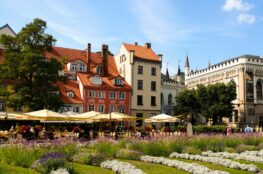
Spring can be an interesting time to visit Europe’s northern cities. The winter crowds are gone, the days are getting longer and the first signs of green begin to appear. Yet, the weather still has a certain unpredictability.
In Tartu, Estonia’s second-largest city, that mix works particularly well. March can still feel distinctly wintry, while April brings softer light, longer afternoons and the feel that the city is waking up after the cold season.
Tartu is not a city that needs to be rushed. Set on the banks of the Emajõgi River in southern Estonia, it is easy to explore on foot, yet has enough to see and do to keep visitors occupied for weeks. It is a university city, a cultural centre, a city of museums, cafés and bookshops, and a place where medieval ruins sit comfortably beside contemporary art spaces and student bars. The University of Tartu, founded in 1632, is at the heart of this character.
A city shaped by its university
Tartu’s history is long and often complicated. The city changed hands between different powers over the centuries, and fires repeatedly destroyed much of its medieval architecture. After the great fires of the 18th century, Tartu was rebuilt largely in the late-Baroque and classical styles that still give parts of the centre their appearance.
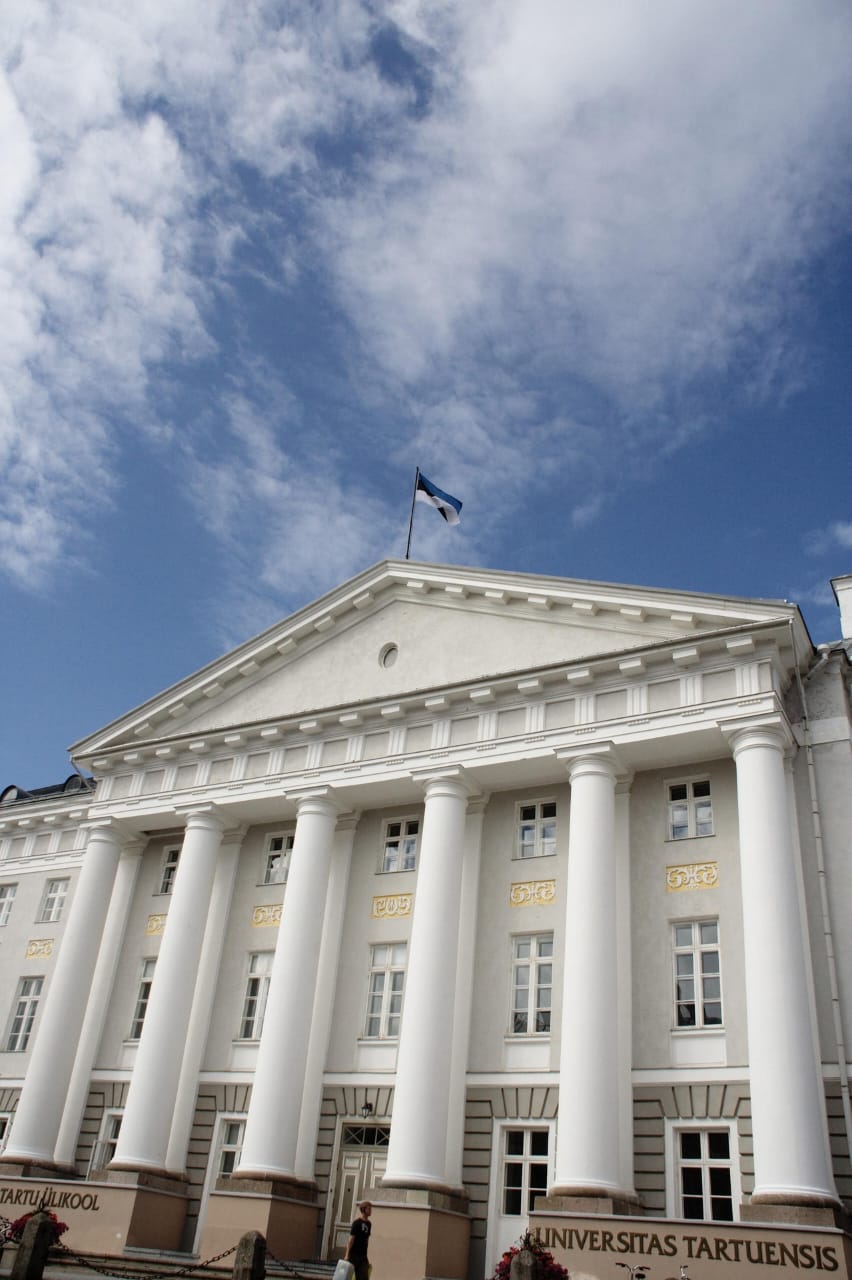
But the event that most strongly shaped modern Tartu was the founding of the University of Tartu in 1632 by Sweden’s King Gustav II Adolf. The university has remained central to the city’s identity ever since. Students, academics, researchers, and writers have helped shape Tartu’s distinctly youthful and intellectual atmosphere despite its relatively small size.
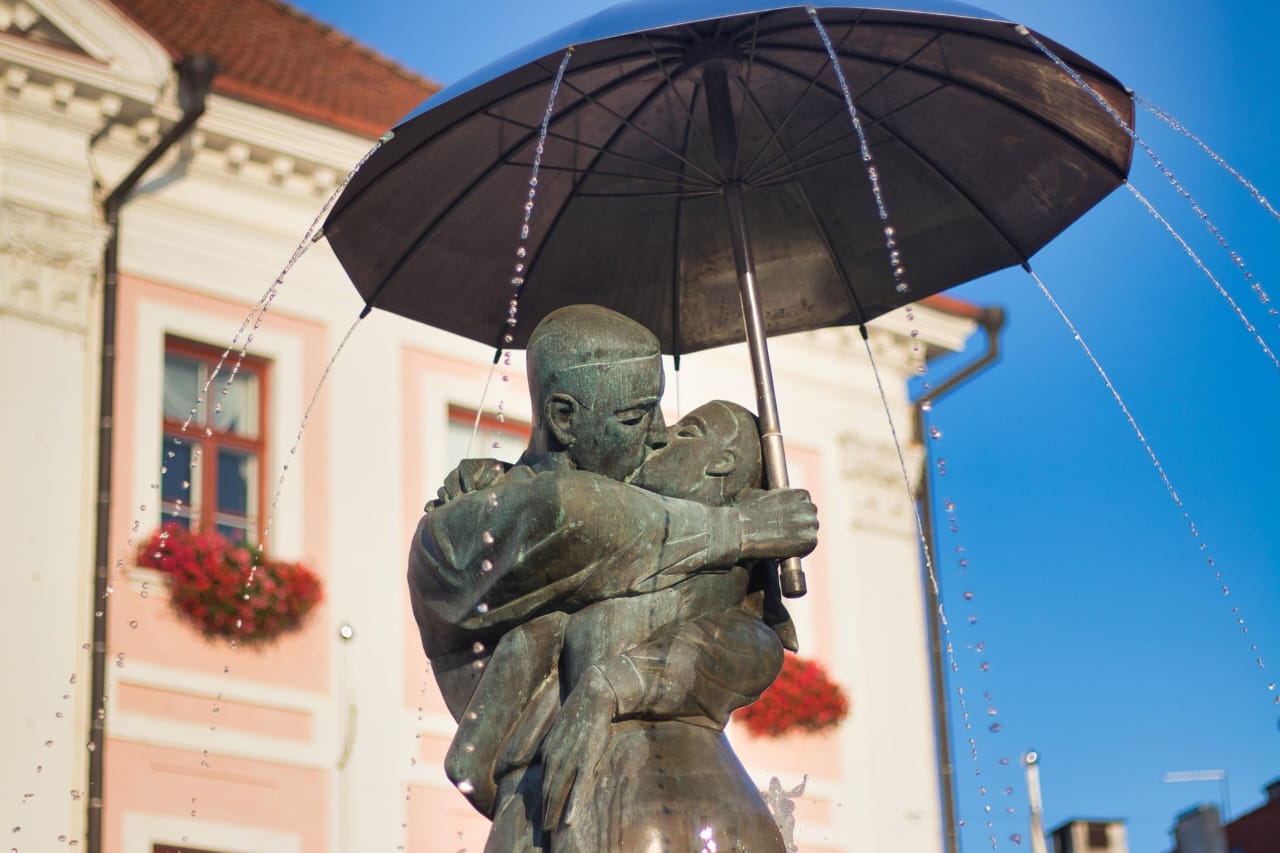
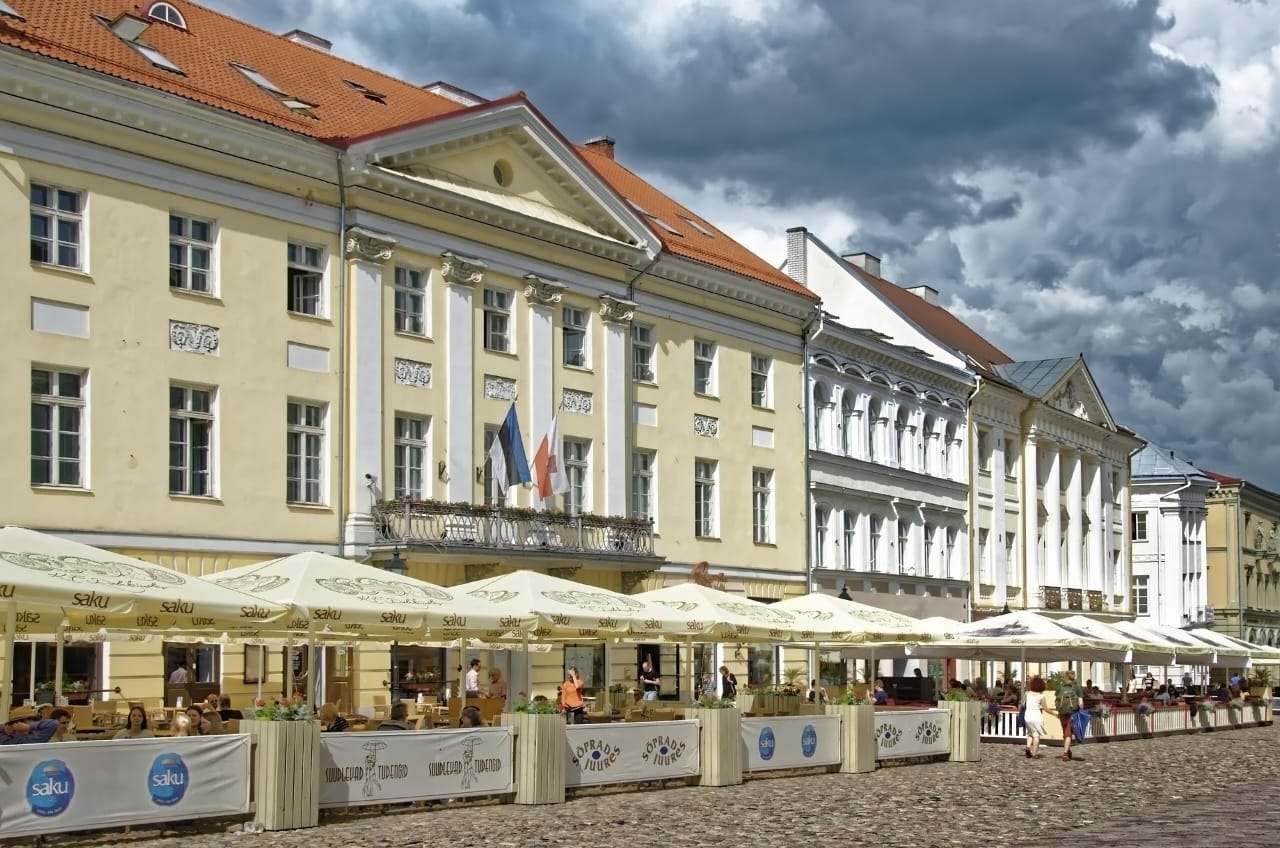
You can start exploring the city around Town Hall Square, the natural centre of the Old Town. The square is framed by historic buildings and the neoclassical town hall, while the famous fountain depicting two kissing students has become one of Tartu’s most recognisable symbols.
From here, wander towards Toomemägi, the hill that rises above the centre. Toomemägi Park is particularly pleasant in spring as the season begins to bring greenery and colour back to the city. Among its highlights are the atmospheric ruins of Tartu Cathedral, reminders of the city’s medieval past, and several historic university buildings.
The university itself deserves more than a passing look. Its main building, museums, and historic surroundings reveal how closely education and everyday life are intertwined here. There is even a preserved university prison, where students were once confined for misdemeanours.
Spring walks, museums, and the Emajõgi
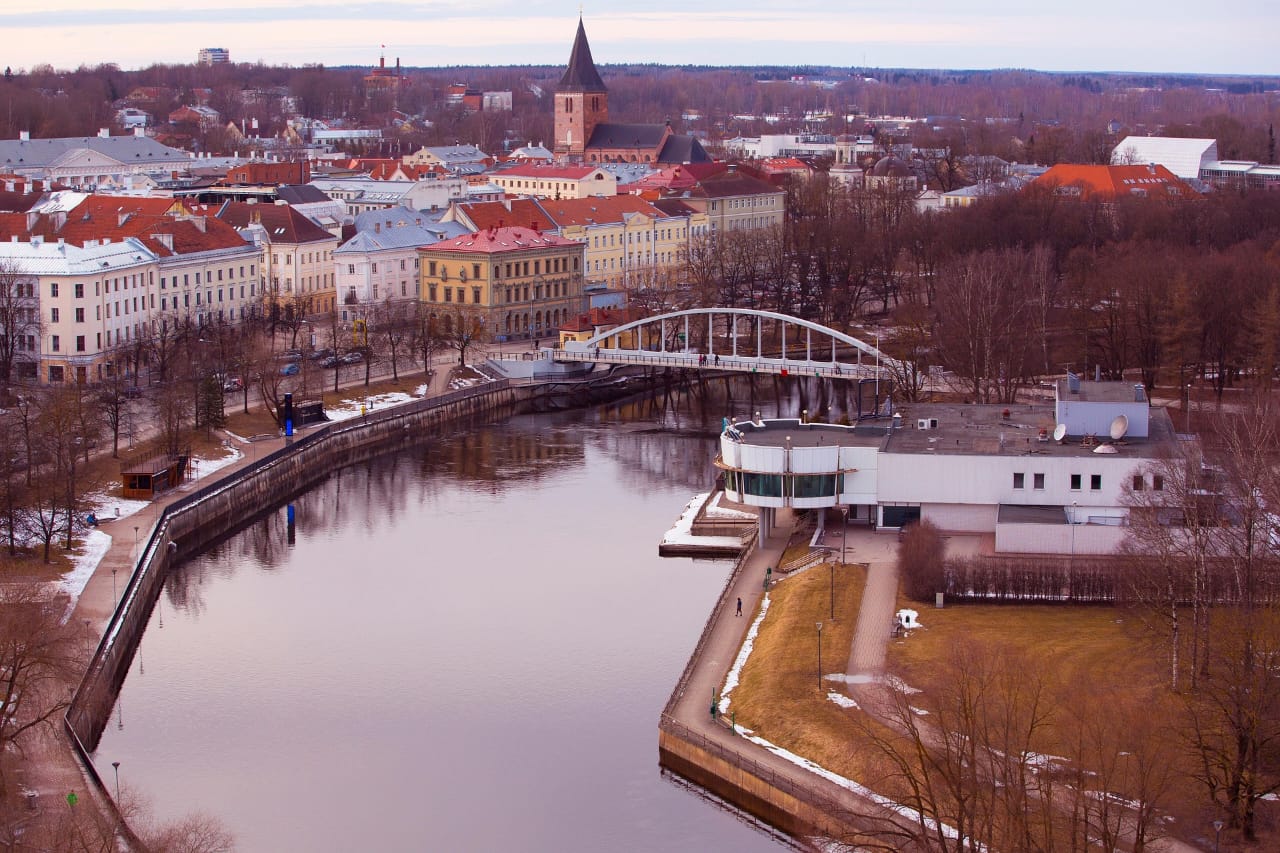
Tartu is a very walkable city, and spring is a good time to explore it on foot. You can follow the Emajõgi river, cross the bridges, wander through the Old Town and continue into residential neighbourhoods without needing any transport.
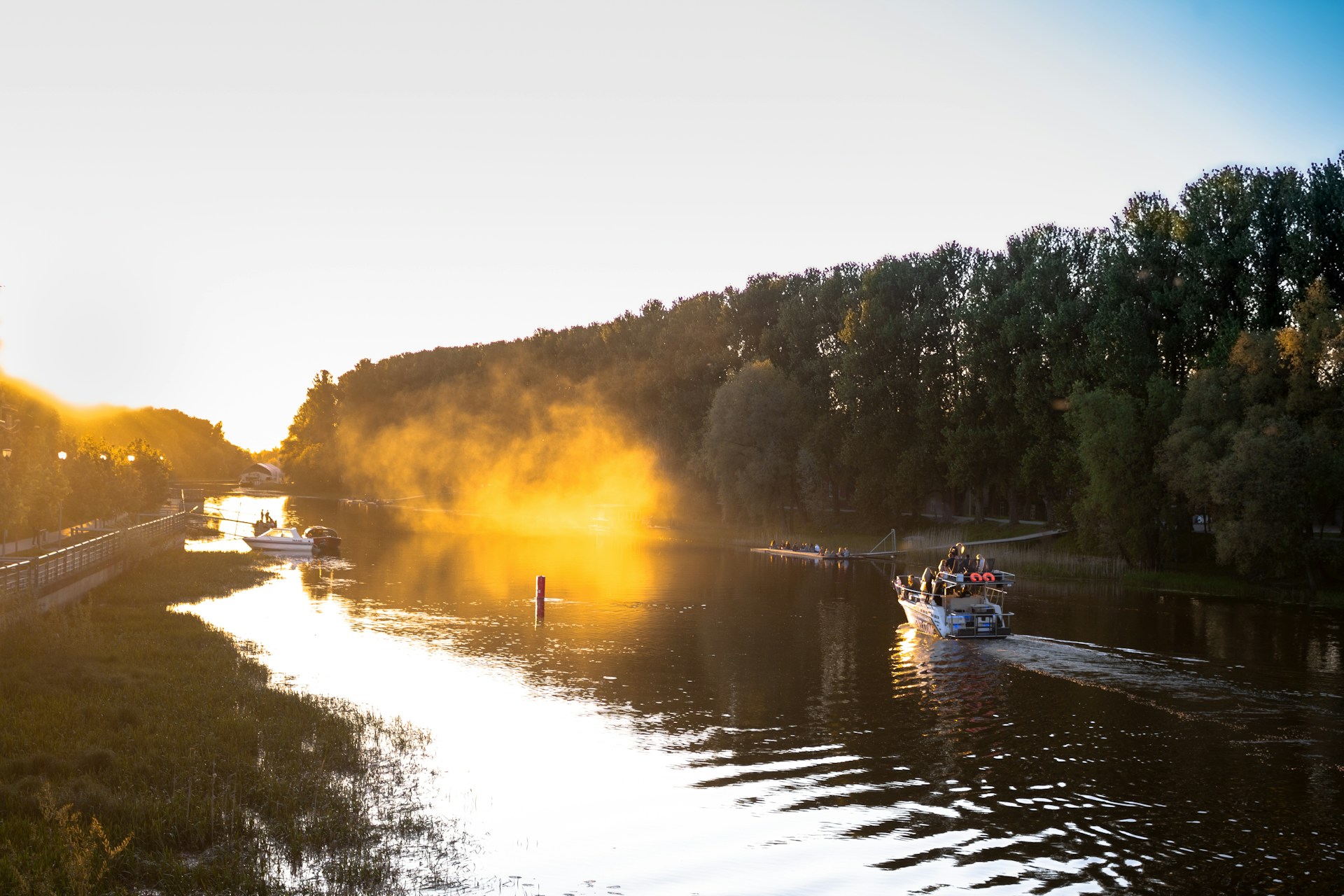
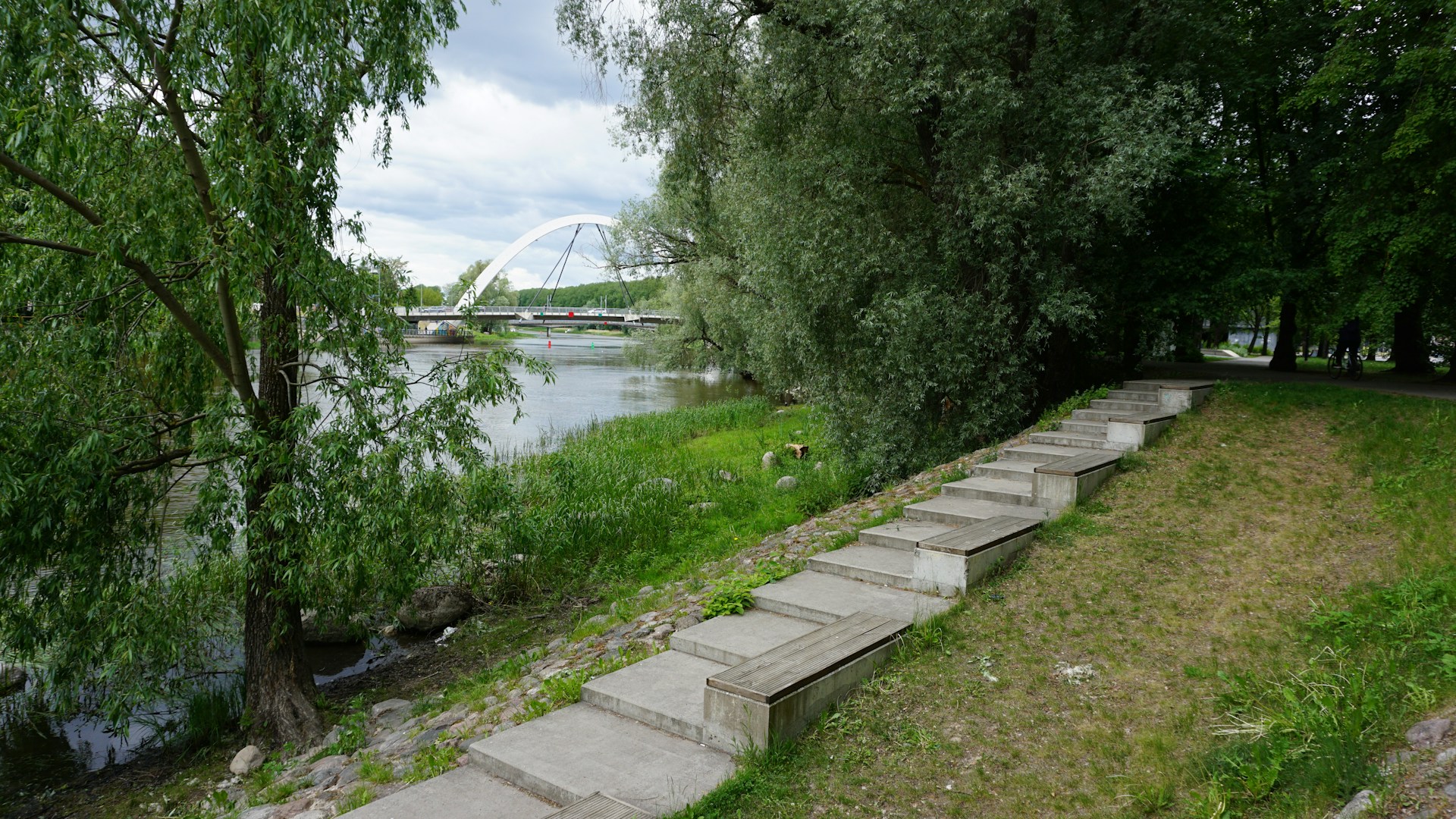
The river is especially important to Tartu. It helped the city develop as a trading centre and remains one of its defining features. In March, the landscape around the water can still look sparse and wintry; by April, the longer daylight and emerging vegetation make riverside walks much more interesting.
When the weather turns cold or wet — something visitors should expect in early spring — Tartu’s museums provide an easy change of pace. The Estonian National Museum is one of the most important stops. Its large, modern building explores Estonian history, culture and everyday life, making it exciting for visitors who want to understand the country beyond its capital.
The AHHAA Science Centre offers something completely different, with interactive exhibits that make it an easy indoor choice when the weather outside is not so favourable. In case you’re wondering, this is a playful name that sounds out the “Aha!” moment. The University of Tartu also has several museums, while the city’s cultural scene offers exhibitions, concerts, theatre and other performances.
The Karlova and Supilinn neighbourhoods of the city are known for their wooden houses, independent cafés, and a more residential atmosphere. Spring is a good time to explore them on foot, when you can see the transition from winter without the crowded feel of the warmer months.
Aparaaditehas, a former industrial complex turned creative quarter, is another place worth spending time in. It combines cafés, restaurants, creative businesses, design, events, and a more alternative side of Tartu. It is the sort of place that works particularly well for repeat visits: rather than seeing everything in one go, you can return for coffee, lunch, an exhibition or an evening event.
Exploring Tartu’s food scene
Food in Tartu reflects both Estonia’s traditional cooking and its modern, international restaurant culture.
For local flavours, look for dishes and ingredients associated with Estonia and southern Estonia – rye bread, potatoes, fish, herring, smoked foods, berries, mushrooms and root vegetables. Traditional foods such as blood sausage and sauerkraut are worth trying if you want a taste of older Estonian cooking. Kama, a mixture of roasted grains traditionally served in different ways, is another local speciality to look for.
Southern Estonia also has a strong connection with forest and farm produce, so seasonal ingredients appear frequently on restaurant menus. Spring is a particularly interesting transition period because menus begin moving away from heavier winter foods towards fresher ingredients.
Tartu’s cafés are special. Coffee and cake are almost part of the city’s culture, helped by its large student population and long literary and intellectual tradition. A café stop can easily become part of a normal day here rather than something reserved for sightseeing.
For contemporary food, Aparaadite has is a good place to explore, with everything from casual international food to more creative cooking. Tartu also has restaurants serving Italian, Mediterranean, and other international cuisines, giving those staying longer plenty of opportunities to try different dishes and flavours.
The Tartu Market Hall is useful for anyone staying for several weeks and cooking occasionally. It provides an opportunity to see what local producers are selling and to pick up ingredients rather than eating every meal out.
What happens after dark?
Tartu’s nightlife is strongly influenced by its university population. It is not a big clubbing destination, but that is part of its appeal. The nightlife is spread across bars, pubs, live-music venues, wine bars and clubs, with plenty of places where you can enjoy your evening.
Möku and Genialistide Klubi are popular with students, while dance clubs such as Trepp provide a livelier option. Craft-beer fans can look for Pühaste Kelder, the taproom of the Pühaste brewery.
There are also wine bars, cocktail spots, and neighbourhood establishments where the atmosphere is more about conversation than partying. In spring, when evenings are still chilly, indoor venues naturally become more convenient than the hotter riverside spots.
April can bring an extra burst of energy. Tartu Student Days: Spring is one of the city’s much-loved annual traditions, when students take over the streets with concerts, competitions, parties and a host of other events. Travellers visiting Tartu around this period can get a glimpse of the city’s student culture through its music, celebrations, and street events.
What is spring actually like?
Weather in Tartu should not be confused with spring in southern Europe.
Average March temperatures are around 4°C during the day and can fall to around -4°C at night. April is considerably milder, with average daytime temperatures around 11°C and nights still close to 1°C. Snow is still possible in March, and April can bring a mixture of sunshine, rain, wind, and unexpectedly cold spells.
During this time daylight gradually increases. Estonia’s spring progresses quickly, and April feels noticeably different from March. Parks begin turning green, trees start budding and outdoor walks become more comfortable.
Spring in Tartu is about being prepared for change rather than waiting for a perfect weather. Remember to pack layers, a waterproof jacket, and proper walking shoes. An umbrella can help, but a wind-resistant outer clothing is often more useful.
Tartu for digital nomads and longer stays
Tartu becomes more interesting when you stop treating it as a two- or three-day sightseeing destination. The city has an easy, comfortable character that works particularly well for a much longer stay.
Most of central Tartu can be covered on foot, while buses connect the wider city. The city also has a bike-share system, including electric bikes, making it possible to explore beyond the centre without having a car.
For digital nomads, the combination of a university population, cafés, reliable internet and dedicated coworking spaces makes the city convenient for remote work. Shared working options such as Mobispace offer hot desks, meeting rooms, phone booths, Wi-Fi and longer-term desk arrangements.
Around a month here also gives visitors time to experience the city in a way that short-break travellers cannot. You can work in the morning, then go out for an afternoon walk along the river or visit a museum, and try a café or restaurant in the evening. Take a local class or cultural event, attend concerts, join a running group or simply become a regular at a neighbourhood spot.
Tartu also works well as a base for exploring southern Estonia.
Spring is a particularly interesting time to venture beyond the city. The wetlands and waterways of Soomaa are associated with Estonia’s famous “fifth season”, when spring flooding can transform forests and paths into waterways. Birdwatching is another seasonal activity as migratory birds return around this time of the year.
The landscapes around Lake Peipsi, including the Onion Route, offer a different side of Estonia, combining villages, food traditions and the culture of the Old Believer communities. The sandstone landscapes around Taevaskoja and the hills of southern Estonia are also within reach for nature-focused excursions.
For a longer stay, it is worth looking beyond the immediate city rather than filling every day with Tartu attractions.
Getting to Tartu and travelling onwards
Tartu has its own airport, with Finnair providing a direct connection with Helsinki. For many international travellers, however, Tallinn, the Estonian capital, is the more practical gateway. From Tallinn, regular trains reach Tartu in about two hours, while buses take roughly two to two-and-a-half hours depending on the service.
There is also a useful new option for travellers combining Baltic countries. Since January 2026, a direct Tallinn–Tartu–Riga train has connected Estonia’s second city with Latvia’s capital, making a multi-country Baltic trip easier. Riga is also accessible by direct bus.
That makes Tartu particularly useful for travellers who want to combine Estonia with Latvia, or who are travelling through the Baltic region rather than visiting Estonia alone.
Tartu also serves as a gateway to the wider southern Estonia region. For a short visit, Tartu offers an easy way to experience its history and cultural sights on foot. And if you plan to stay longer for weeks, it becomes a place where sightseeing gradually gives way to everyday life.