
In cities across the United Kingdom, people are slowing down in places they might once have passed without a second thought—a quiet street in Bristol, a busy lane in London, or the side of an ordinary building. What catches their attention is not always obvious at first glance. But look a little closer, and a familiar stencil or striking image begins to stand out.
These are the works of Banksy—the elusive street artist whose murals have quietly turned everyday corners into points of interest. Over time, his art has drawn travellers into neighbourhoods they might not have otherwise explored, creating a different kind of journey—one shaped by curiosity, chance, and the simple act of looking more carefully at the world around them.
Unlike traditional art tourism, which revolves around galleries and museums, Banksy’s works exist out in the open. They appear without warning, attract people’s attention within hours, and sometimes disappear just as quickly—removed, vandalised, or preserved behind glass.
The Artist Behind the Movement
Emerging from the underground art scene of Bristol in the late 1990s, Banksy developed a signature stencil style that allowed him to create complex pieces quickly, often under the cover of night. His works blend dark humour with sharp political commentary, tackling themes ranging from war and surveillance to consumerism and migration.
What makes Banksy’s art compelling for travellers is its accessibility. There are no tickets to buy, no queues to stand in, and no official opening hours. The city itself becomes the gallery, and the act of finding a mural becomes part of the experience.
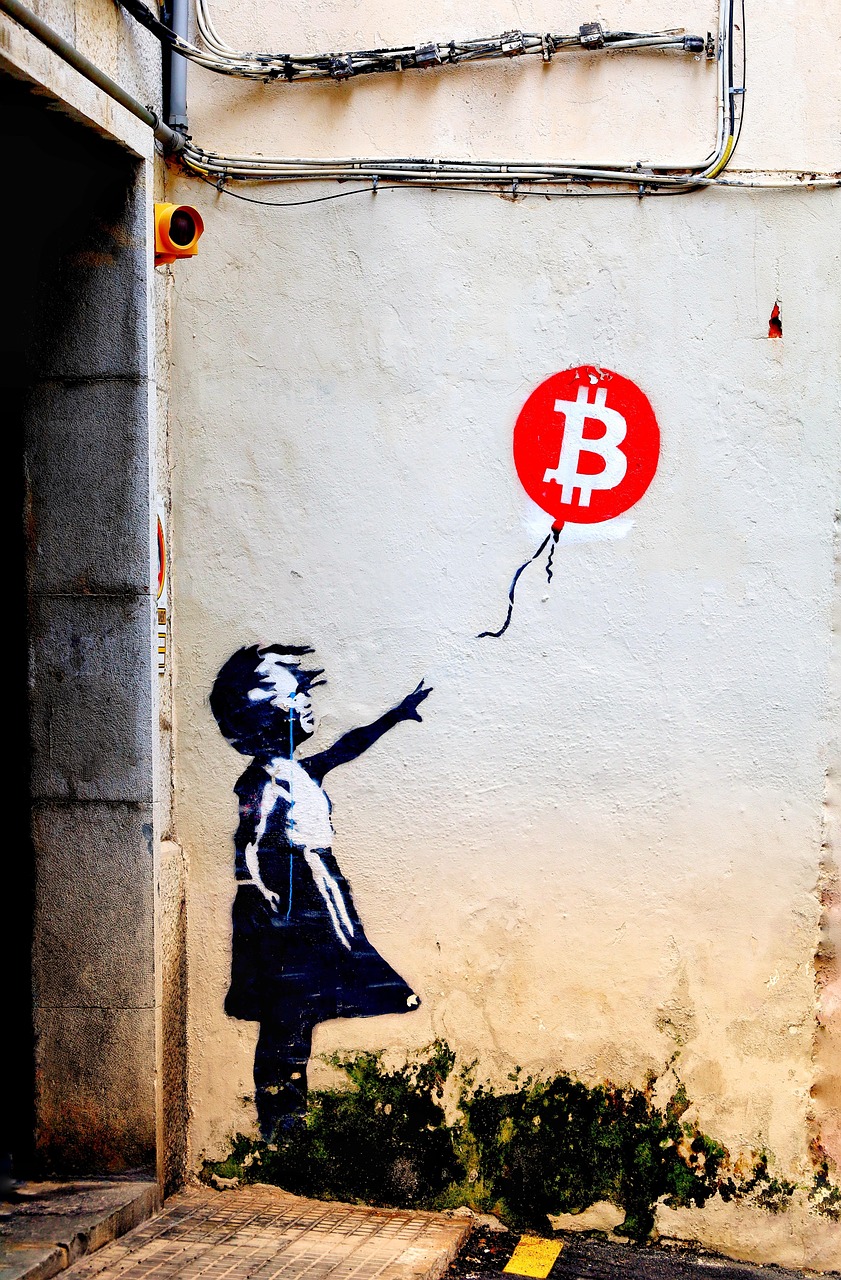
This accessibility has turned his works into global attractions, drawing visitors who might otherwise never have ventured into certain neighbourhoods. It has, in a way, reshaped urban tourism, creating routes and destinations that exist entirely outside traditional travel guides.
A Mystery That Continues to Travel
The allure of Banksy’s work is inseparable from the mystery of his identity. For decades, speculation has surrounded who he might be, with theories ranging from a collective of artists to a single individual operating under a pseudonym.
Recently, that mystery resurfaced in a major way following an investigation by Reuters, which suggested that Banksy could be Robin Gunningham, a Bristol-born man long linked to the artist. The report reignited global debate, even as representatives disputed the claims and the artist’s identity remained officially unconfirmed.
For many travellers, however, the uncertainty is part of the appeal. The anonymity adds a unique layer to the experience—turning each mural into not just a piece of art, but a clue in a cultural puzzle.
Bristol: Where It All Began
Any journey into Banksy’s art tourism naturally begins in Bristol, the city where the artist’s voice first took shape. His presence is somehow embedded in the city’s identity.
One of his most famous works, Well Hung Lover, still adorns the side of a building. It has become a landmark, drawing visitors who come specifically to see it up close. The mural’s survival is significant, considering how many of Banksy’s works elsewhere have been lost.
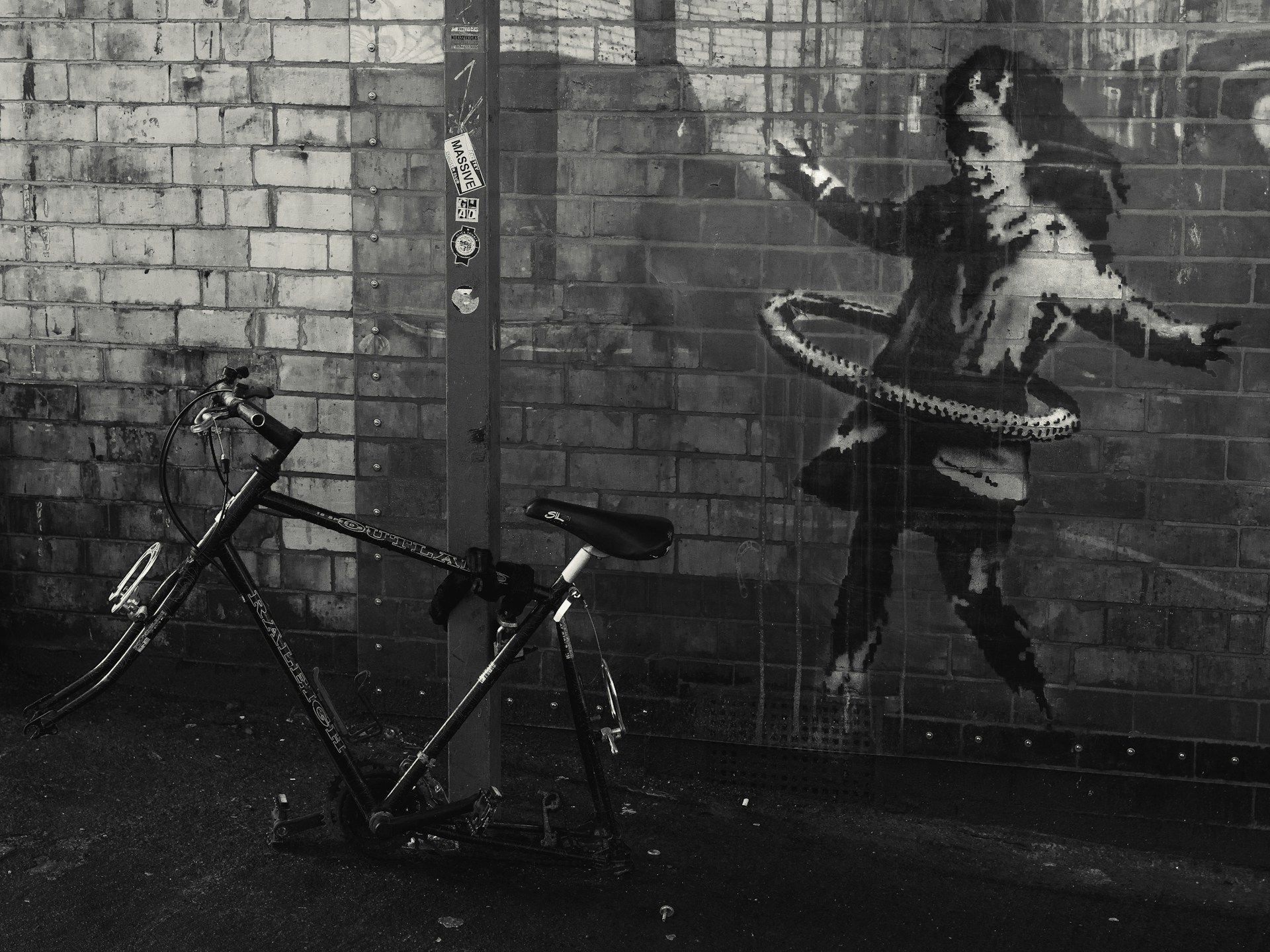
Bristol’s broader street art culture also plays a role in sustaining this interest. The city has embraced its association with Banksy, with walking routes and guided tours often weaving together his works with those of other street artists. Even for those unfamiliar with his full body of work, Bristol offers a sense of origin—a place where the story began and public space blends with artistic expression.
London: A Gallery That Never Stays Still
If Bristol represents Banksy’s roots, London reflects his evolution. The English capital has seen several of his works appear over the years, often in central or high-profile locations that amplify their impact.
Neighbourhoods like Shoreditch and Camden have become particularly associated with street art culture, attracting visitors who wander through their streets in search of murals. In many cases, the artwork itself may no longer be there, but its legacy lingers.
A recent example is the mural that appeared near the Royal Courts of Justice, which instantly drew crowds before being removed. Despite its disappearance, the site continues to attract attention, with visitors curious to see where the artwork once stood. It is a pattern that has become familiar: appearance, attention, removal, and then a lingering impact as a place of interest.
London’s scale and constant change make it an ideal canvas for Banksy’s work. Here, the experience is less about finding a fixed set of murals and more about engaging with a city that is always in flux.
Beyond the Big Cities
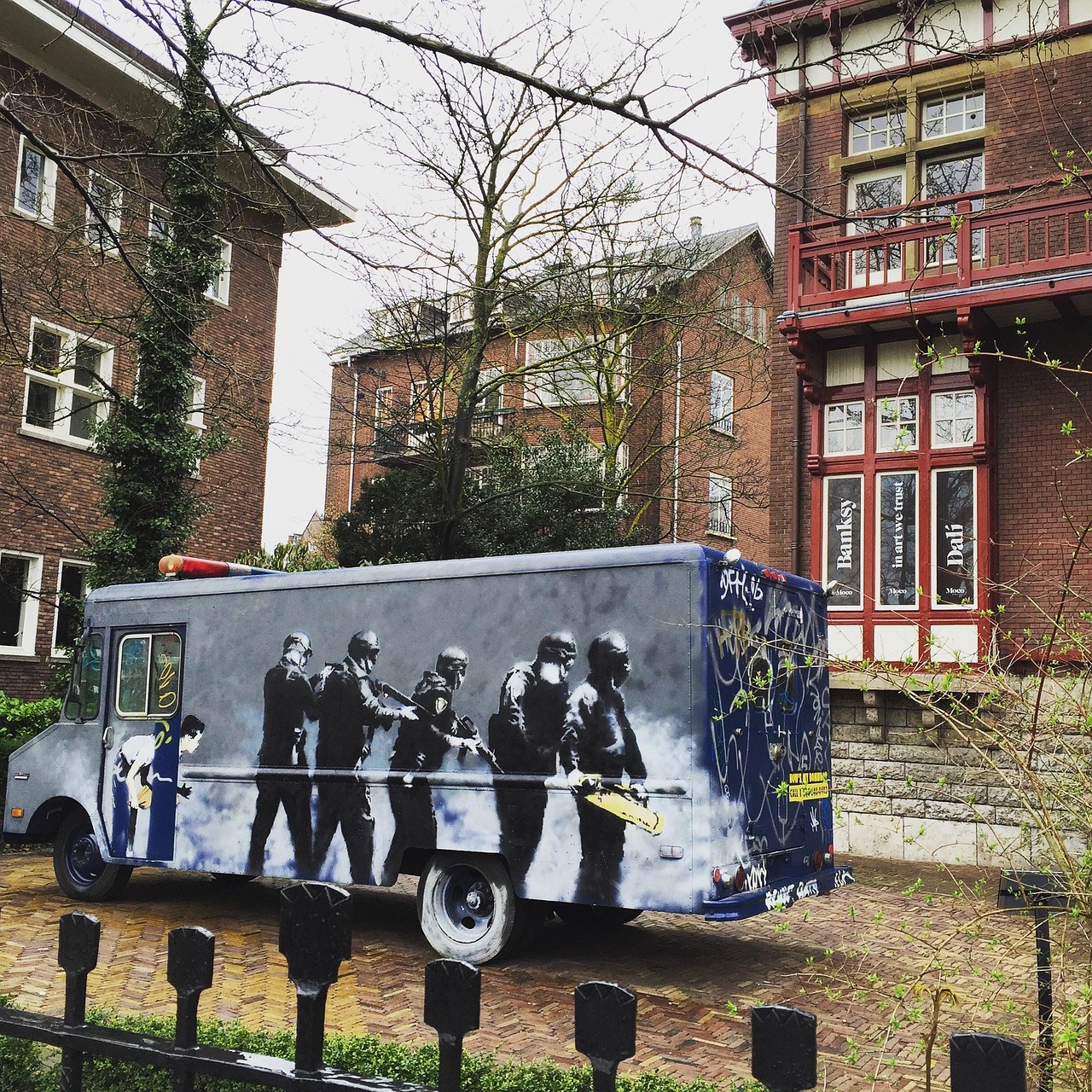
While Bristol and London form the core of Banksy’s art work in the UK, his murals have appeared in several other locations, including Brighton and Manchester. These pieces often generate appealing interest—drawing visitors who are eager to see them before they disappear.
What makes these destinations particularly intriguing is the lack of a formal trail. Unlike heritage sites or museum galleries, there is no specific map of Banksy’s works. Enthusiasts rely on online communities, social media updates, and word of mouth to track new pieces.
This sense of unpredictability adds to the appeal. Travellers are not simply following a checklist; they are participating in an exploration, where the reward is as much about the search as it is about the discovery.
Art That Doesn’t Always Last
One of the defining characteristics of Banksy’s work is that it’s not permanent. Unlike traditional art forms that are carefully preserved, his murals exist at the mercy of their surroundings.
Some have been vandalised, painted over, or removed entirely. Others have been physically extracted from walls and sold, sparking debates about ownership and artistic intent. In certain cases, local authorities or property owners have taken steps to protect the artwork, installing glass coverings to prevent damage.
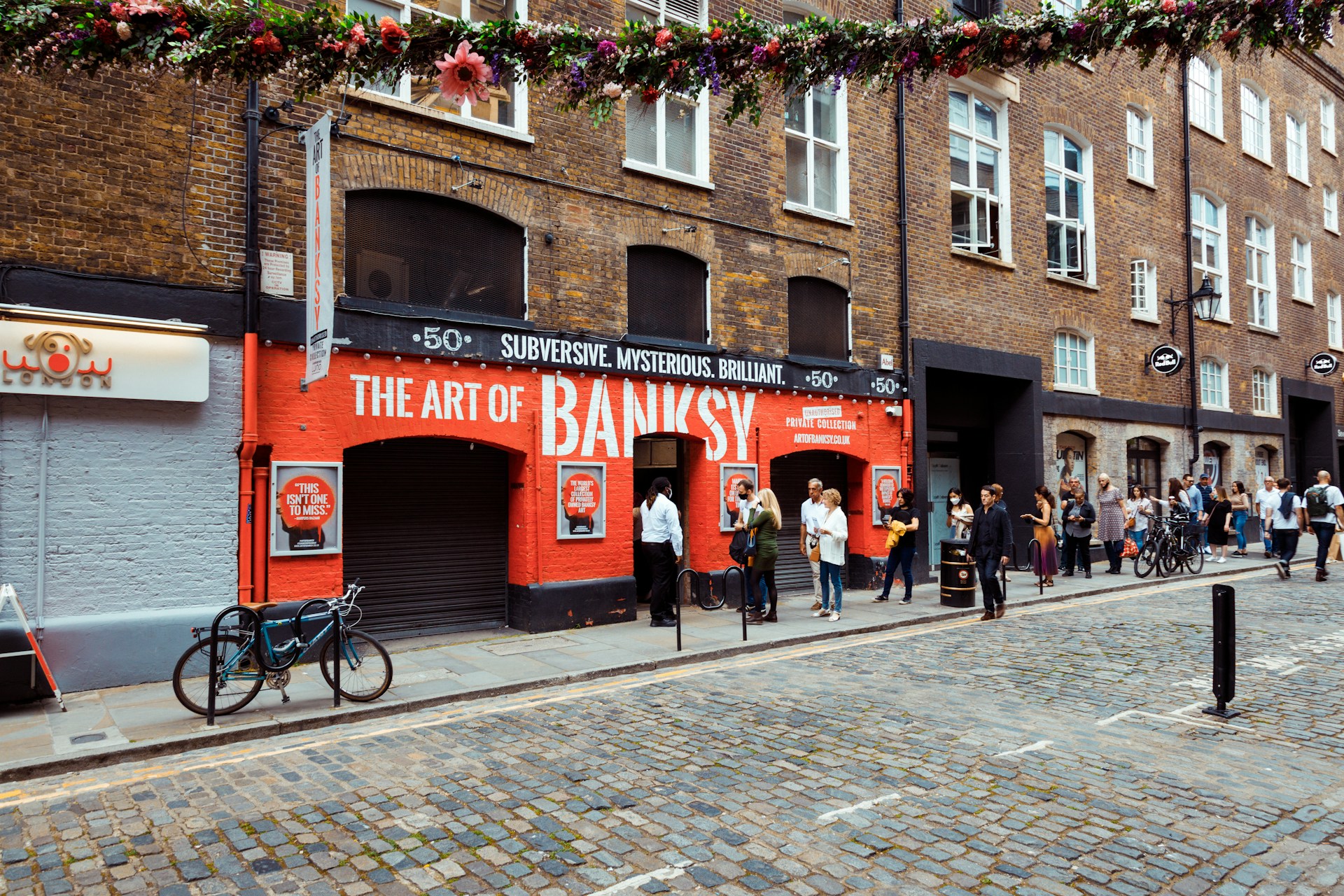
For travellers, visiting a Banksy mural often comes with a sense of urgency—the knowledge that it may not be there on a future trip. Even when a piece has disappeared, the location itself can retain a certain significance, becoming part of the narrative of the artwork.
Between Rebellion and Commerce
Banksy’s works have long reflected a quiet resistance to authority, often touching on themes of power, consumer culture, and control. At the same time, as Banksy has become more widely known, his art has also grown more valuable.
In some cases, buildings carrying his murals have become more sought after, while certain pieces have been taken down and sold for significant amounts. This has created a subtle tension—between the spirit in which the works appear in public spaces and the growing commercial interest that follows them.
For travellers, this contradiction adds a different layer of complexity. Visiting a Banksy mural is not just about appreciating the art—it is also about engaging with the broader questions it raises about ownership, authenticity, and the role of art in public space.
Following the Trail
Exploring Banksy’s art across the UK is not just about following a fixed itinerary – it involves wandering through neighbourhoods, paying attention to the unexpected, and remaining open to the idea that the most significant discovery might be unplanned.
While some travellers seek out specific, well-known pieces, others approach it more loosely—visiting areas known for street art and seeing what they discover. Timing can also play a role, as new works tend to generate the most excitement in the days immediately after they appear.
It feels quite different from traditional travel experiences. It is less about fixed landmarks or carefully planned stops, and more about the moments in between—brief, often fleeting encounters with art that appears in the most unexpected places.
The Appeal of the Unfinished Story
Banksy’s murals are not just about what is visible, but also about what remains unknown. The artist’s identity is still being debated, his works continue to appear and disappear, and the cities that host them never cease to evolve.
For travellers, this makes the experience feel both personal in the moment and open to interpretation. Each visit offers something different, shaped by timing, location, and chance.
Banksy’s art does not always seek to be preserved in the usual way. Instead, it gently encourages people to look more closely at their surroundings—to notice what might otherwise be missed, and to see how even the most ordinary wall can hold a quiet sense of meaning.
In turning streets into galleries and cities into stories, Banksy has not just changed the art world. He has changed the way people travel through it.
With Banksy’s identity revealed — and though Robin Gunningham has not officially confirmed, evidence suggests it is almost certainly him — there are expectations that the value of his art is only going to increase. This generates renewed interest in his street art strewn around the UK and elsewhere in the world.