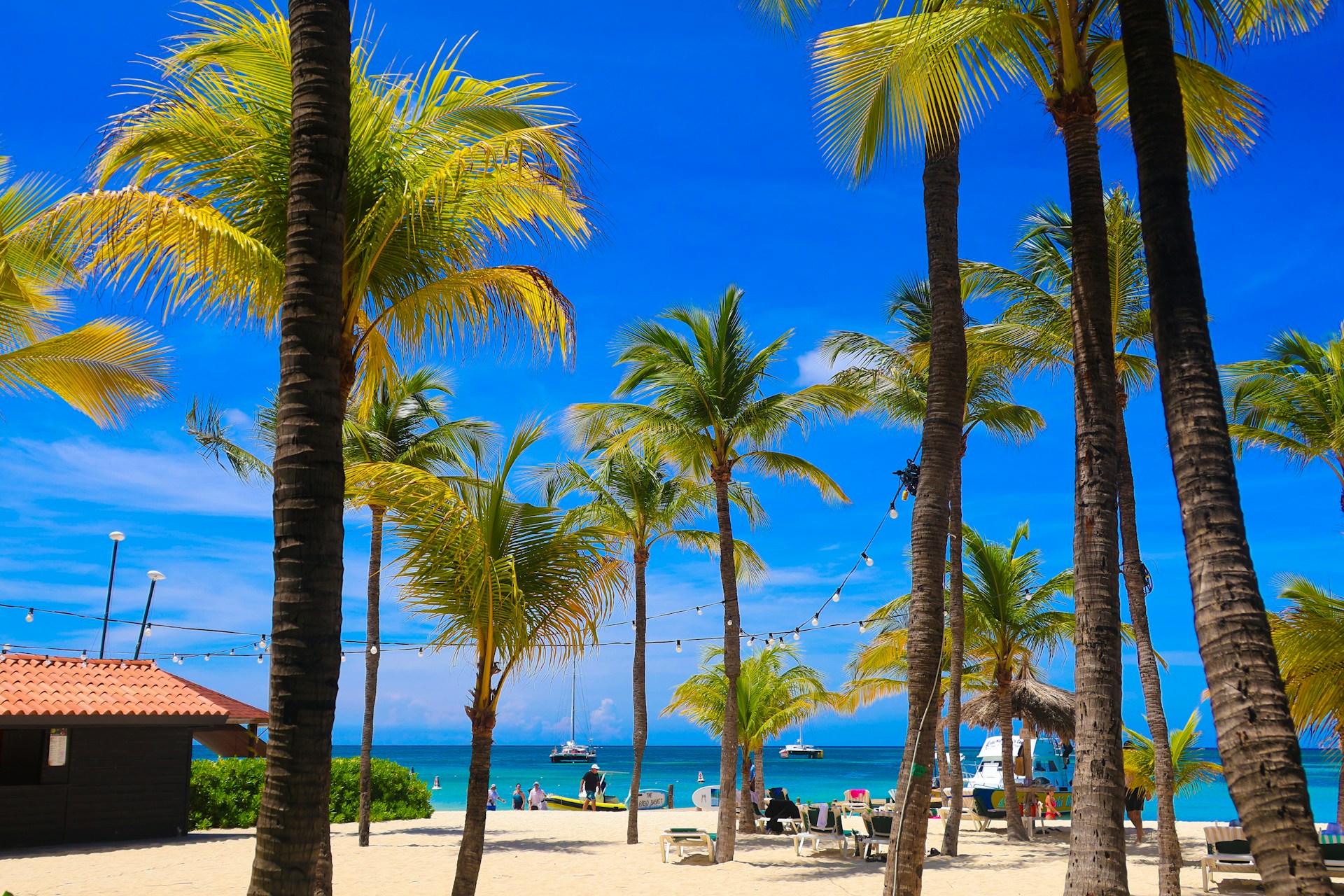
A turquoise sea and white-sand beaches meet a dry landscape of cacti, rocky coastlines and windswept desert in Aruba.
Add colourful Dutch-influenced architecture, Latin American flavours, and lively local culture and sunny skies to the mix and you get an island that feels distinctly its own.
Aruba sits in the southern Caribbean, just about 25 km north of Venezuela. It is one of the three so-called ABC islands — Aruba, Bonaire and Curaçao — and is an autonomous country within the Kingdom of the Netherlands. The island is small, roughly 30 km long and 10 km wide, so it doesn’t take too long getting from one side to another.
Getting to Aruba
Aruba’s international gateway is Queen Beatrix International Airport, near Oranjestad, the capital. Aruba is well connected to North America, Europe, Latin America and other Caribbean islands, with frequent flights from major cities in the US and Canada. KLM operates services via Amsterdam, while travellers can also connect through the US or other international hubs.
Travellers from farther locations will usually need to connect through one of these international hubs. The best route will depend on where you are travelling from, but Miami, New York, Amsterdam and other major gateway cities offer convenient connections to Aruba.
Before booking, check the entry requirements that apply to your nationality, as visa rules vary depending on your passport. Travellers should also make sure their passport meets the required validity period and have details of their accommodation and onward or return journey ready. Aruba also requires visitors to complete its online Embarkation and Disembarkation Card before arrival. Entry requirements can change, so it is worth checking the latest official information before you travel.
The Aruba you don’t see in the postcard
Beaches are certainly the main attraction in Aruba, but the island becomes more interesting once you move away from the busy central area.
The western and southern parts of the island are where you’ll find the big resorts, restaurants, shops and nightlife. Palm Beach is the busiest of these, with a long stretch of sand lined with hotels, restaurants and bars. Nearby Eagle Beach is quieter and more open and is one of the places to go when you want to feel a classic Caribbean beach experience.
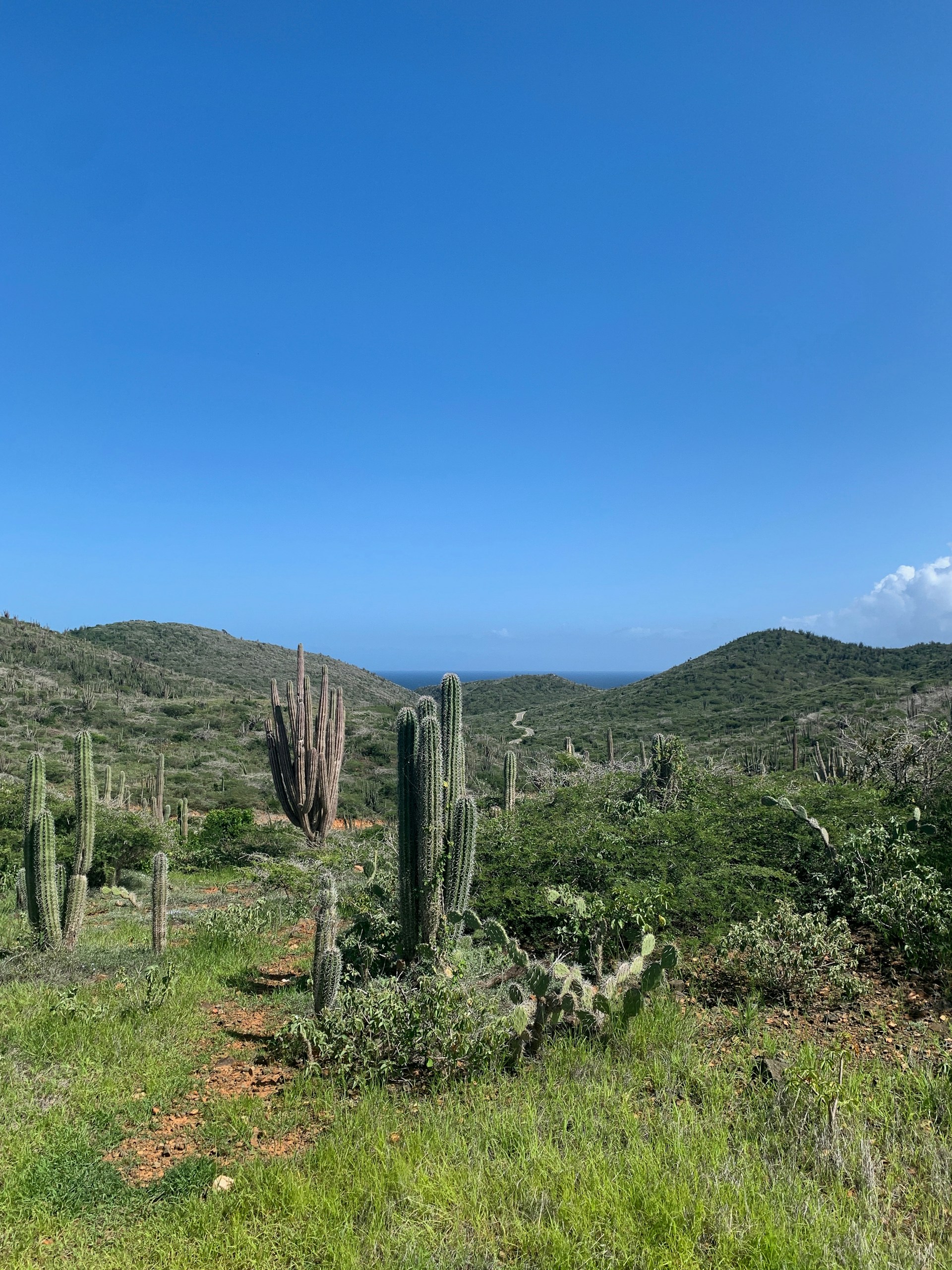
If you want a change in landscape, head towards the northern and eastern side where the island is very rugged and dry. Cacti rise from the sand, the sea hits rocky cliffs and the roads lead into a very different side of Aruba. Much of this is protected within Arikok National Park, which covers a substantial part of the island and is home to caves, desert-like terrain, natural pools and coastal areas.
One of Aruba’s biggest surprises is that it doesn’t look like a typical Caribbean destination everywhere. You can be lying on a white beach in the morning and driving through cactus-covered countryside later the same day.
Beaches, but with different personalities
If you only have time for a couple of beaches, make them Eagle Beach and Baby Beach.
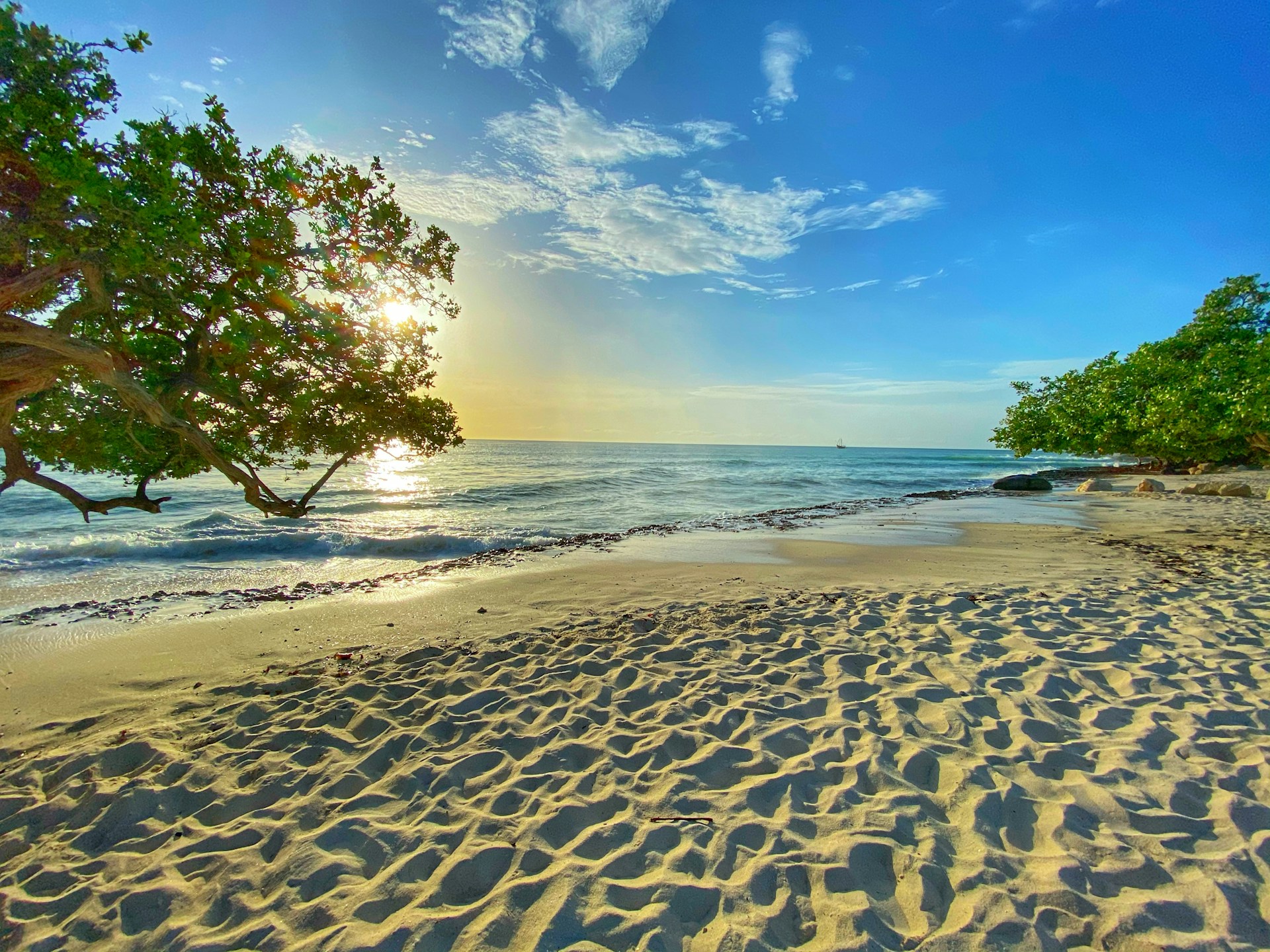
Eagle Beach is wide and relatively peaceful, making it ideal for a slow afternoon. Its famous fofoti trees have become one of Aruba’s most recognisable sights.
Baby Beach, at the island’s southern end, is different. A curved stretch of shallow, calm water makes it particularly appealing for swimming and snorkelling. The journey there also gives you a chance to see a less crowded side of Aruba.
For something different, head towards Mangel Halto, where mangroves and calm waters make for good snorkelling. The northwestern coast around Arashi Beach is another popular choice, particularly around sunset.
And don’t feel obliged to spend every day at a different beach. Aruba is small enough that you can choose your own favourite and return to it.
A day in Oranjestad
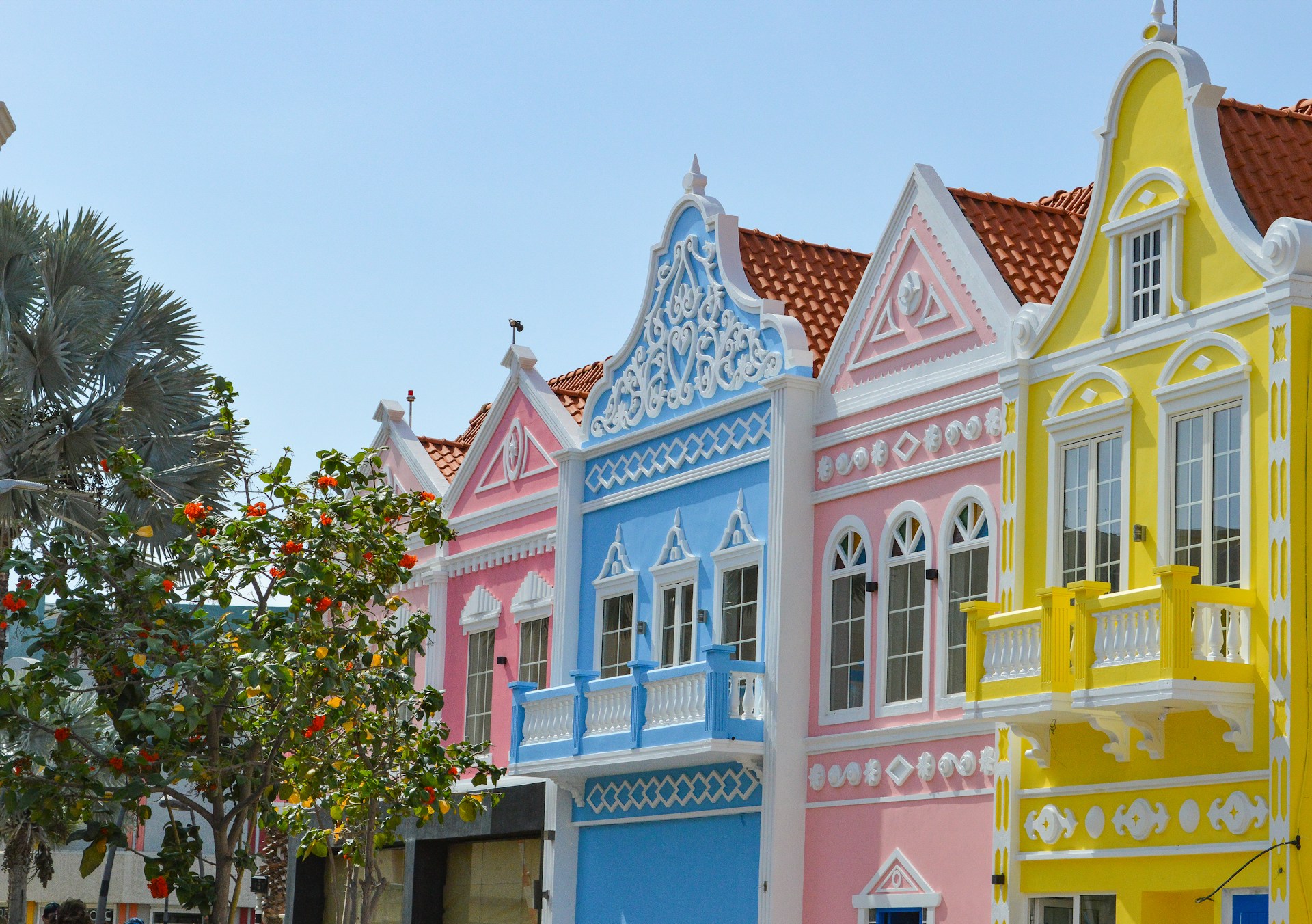
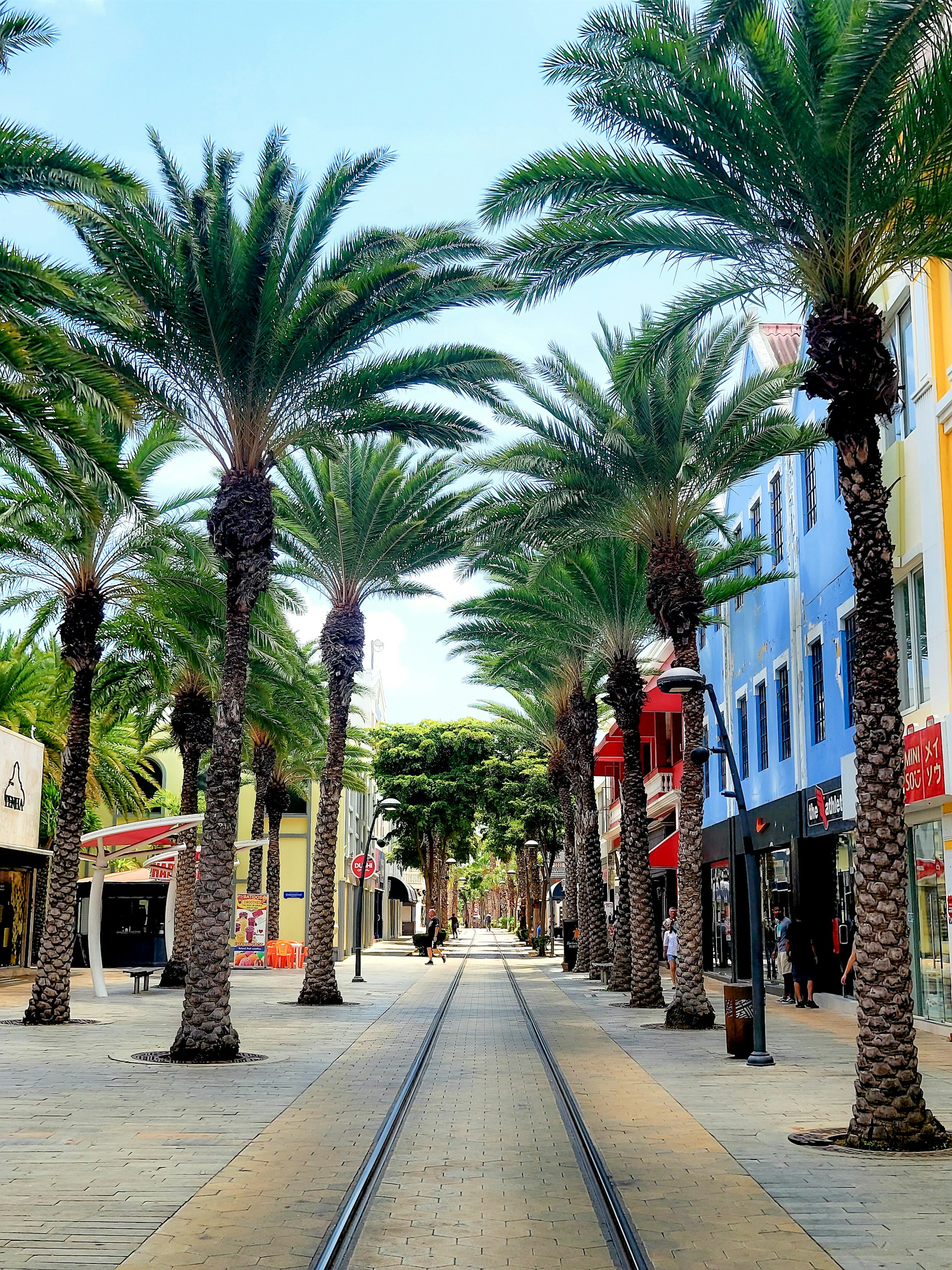
You can explore Oranjestad, Aruba’s capital, without much planning. Its pastel-coloured buildings, waterfront, cafés and shops give it a different feel from the typical resort areas.
Start around the historic centre and walk towards Fort Zoutman, the oldest building in Aruba, dating to 1798. Beside it is the Willem III Tower, while the Historical Museum tells more of the island’s story.
Oranjestad is also where Aruba’s Dutch heritage is easiest to spot, although the city feels far more Caribbean than European. You can browse shops, stop for coffee or lunch, and simply wander the streets rather than trying to tick off every attraction.
If your visit coincides with Tuesday evening, look out for the Bon Bini Festival at Fort Zoutman, where traditional music, dance, food and local arts come together in a celebration of Aruban culture.
Meet Aruba’s many cultures
Aruba’s culture is one of its most interesting features. More than 90 nationalities inhabit the island, and that diversity shows up in its language, music, food and everyday life. The official languages are Papiamento and Dutch, while English and Spanish are widely spoken.
You’ll hear Papiamento everywhere. Even learning a couple of words can be fun — bon bini means welcome, while dushi is a wonderfully versatile word used for something sweet, nice or dear.
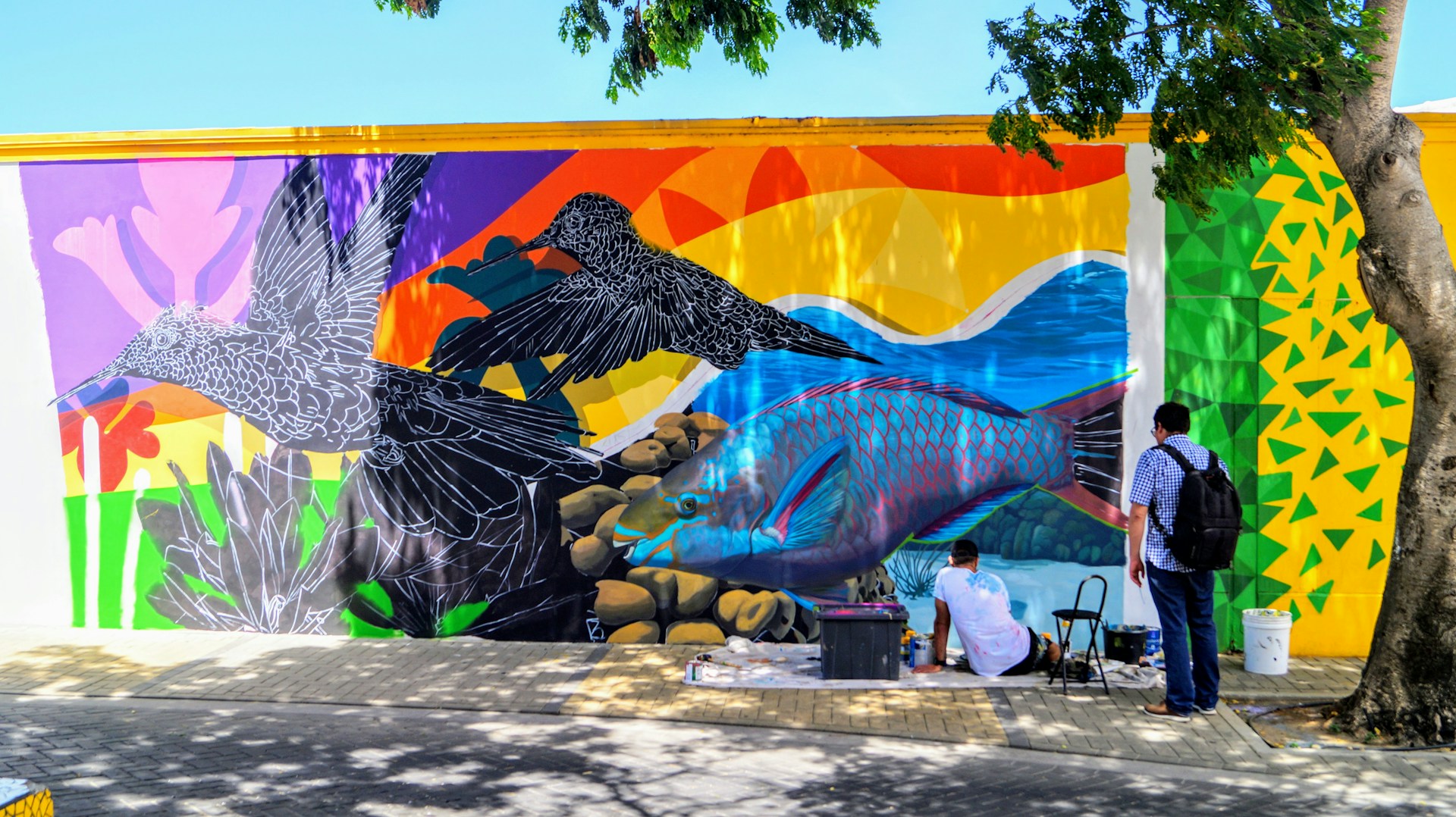
For a deeper experience of local culture, head south to San Nicolas, known for its colourful murals and laid-back character. It feels far removed from the high-rise atmosphere of Palm Beach and offers a glimpse of Aruba’s local life.
You cannot miss Aruba’s local food
Aruba’s food is as mixed as its population. Dutch, Caribbean, Latin American, African and other influences have found their way onto the island’s tables, alongside plenty of fresh seafood.
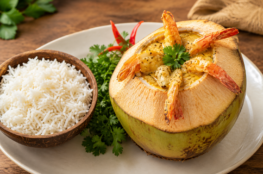
Start with pastechi, a fried pastry usually filled with meat, cheese or other savoury fillings. Then try keshi yena, one of Aruba’s best-known dishes: a rich filling traditionally cooked inside a round shell of melted cheese.
There is also funchi, a cornmeal side dish similar to polenta, and pan bati, a slightly sweet cornmeal flatbread. For something heartier, look for stoba, a slow-cooked stew, or order freshly caught fish such as mahi-mahi or red snapper.
Don’t restrict yourself to big restaurants and cafes. Small local eateries, food trucks and casual restaurants are often the better places to discover everyday Aruban flavours.
What else can you do?
Water activities are an obvious choice. Snorkelling, sailing, kayaking, windsurfing and diving are all available, while the island’s steady trade winds make it particularly popular for wind- and kitesurfing.
For something more adventurous, take a 4×4 tour through Arikok National Park. Explore caves such as Fontein and Guadirikiri, stop at the Natural Pool and drive along the rugged coastline. The park’s terrain is rough in places, so this is one excursion where a guided tour or suitable vehicle makes sense.
For a quieter experience, take a sunset sailing trip. As the sun drops into the Caribbean Sea, the colour of the water changes and the pace of the day slows down.
A five-day Aruba itinerary
If you are planning to visit Aruba, five days work well for an exhaustive, relaxed trip.
Day 1 – Settle in and hit the beach
Arrive, check in and keep the first day easy. Spend the afternoon at Palm Beach or Eagle Beach, followed by dinner near the waterfront.
Day 2 – Oranjestad and local culture
Spend the morning exploring Oranjestad, including Fort Zoutman and the historic centre. Have lunch in town before heading back towards the coast. In the evening, enjoy a local restaurant or, if it falls on a Tuesday, the Bon Bini Festival.
Day 3 – Arikok National Park
Set aside most of the day for Arikok. Explore its caves, rugged coastline and desert-like scenery, with the Natural Pool as one of the highlights. Finish the day with a relaxed dinner somewhere rather than rushing back into the main resort area.
Day 4 – San Nicolas and Baby Beach
Drive south to San Nicolas to see its street art and experience a different side of the island. Continue to Baby Beach for swimming and snorkelling. On the way back, stop somewhere local for seafood or another Aruban meal.
Day 5 – Choose your own Aruba
It is best to keep the final day flexible. Return to your favourite beach, go snorkelling or sailing, take a morning kayak trip or simply enjoy a slow, relaxing day. Finish with a sunset cruise or dinner beside the sea.
A few things worth knowing
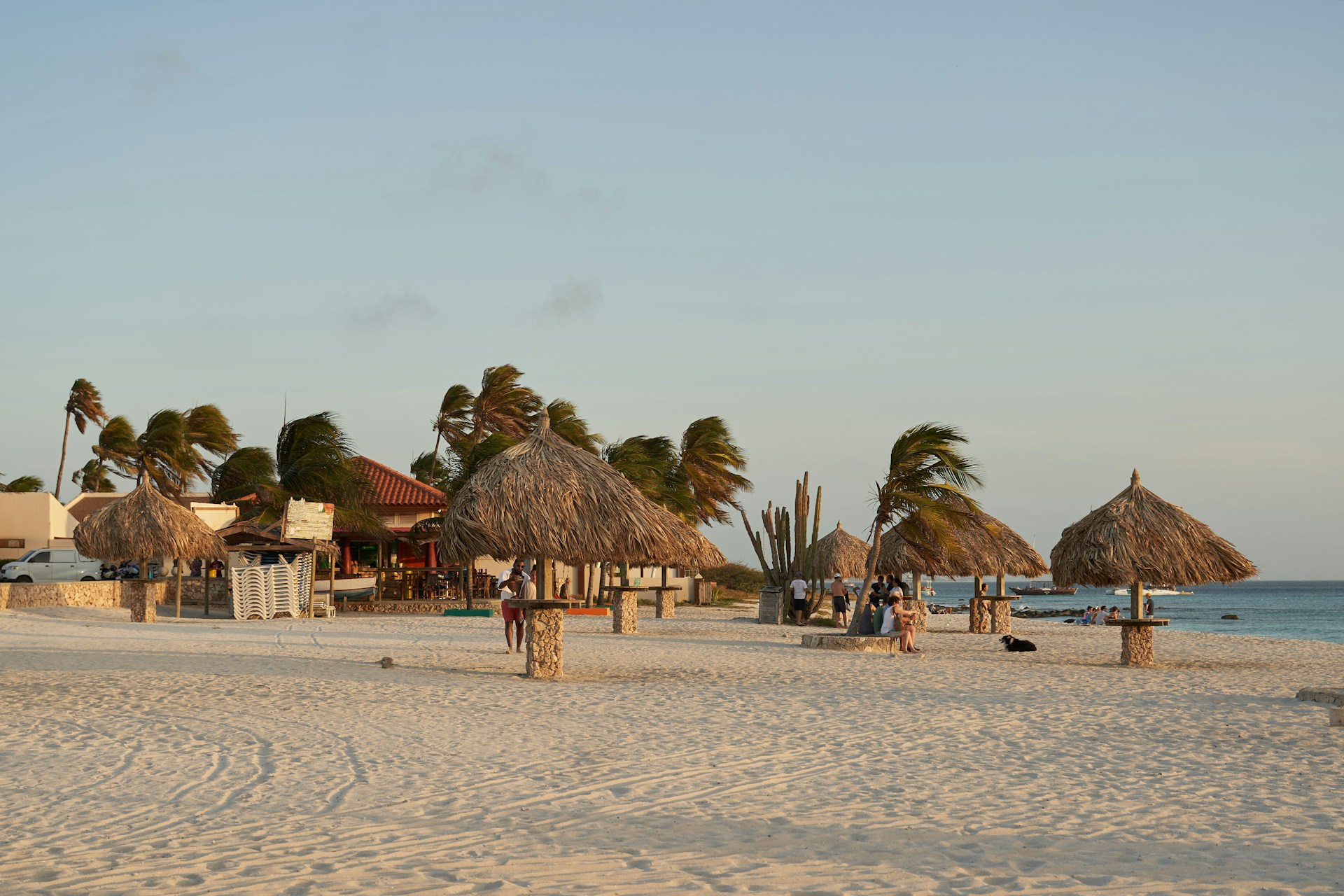
Aruba is outside the main Atlantic hurricane belt, which helps explain its reputation for perpetual sunshine. It is also windy — the trade winds are a constant part of the island’s character — so a light cover-up can be useful even when the temperature is high.
The local currency is the Aruban florin, although US dollars are widely accepted. The island uses Atlantic Standard Time and does not observe daylight savings.
A rental car is useful if you want to explore Arikok, San Nicolas, and the quieter beaches at your own pace. Taxis, buses and organised tours work well if you prefer not to drive.
And perhaps the most important tip — don’t plan Aruba too tightly. This is a small island, but rushing from one attraction to another doesn’t make sense. Leave some hours empty. Swim for longer than planned. Stop for a pastechi. Sit somewhere with a sea view and watch the wind move through the palms.
That slower rhythm — alongside the beaches, food, culture, and rugged landscape — is what makes Aruba more than just another Caribbean destination.