
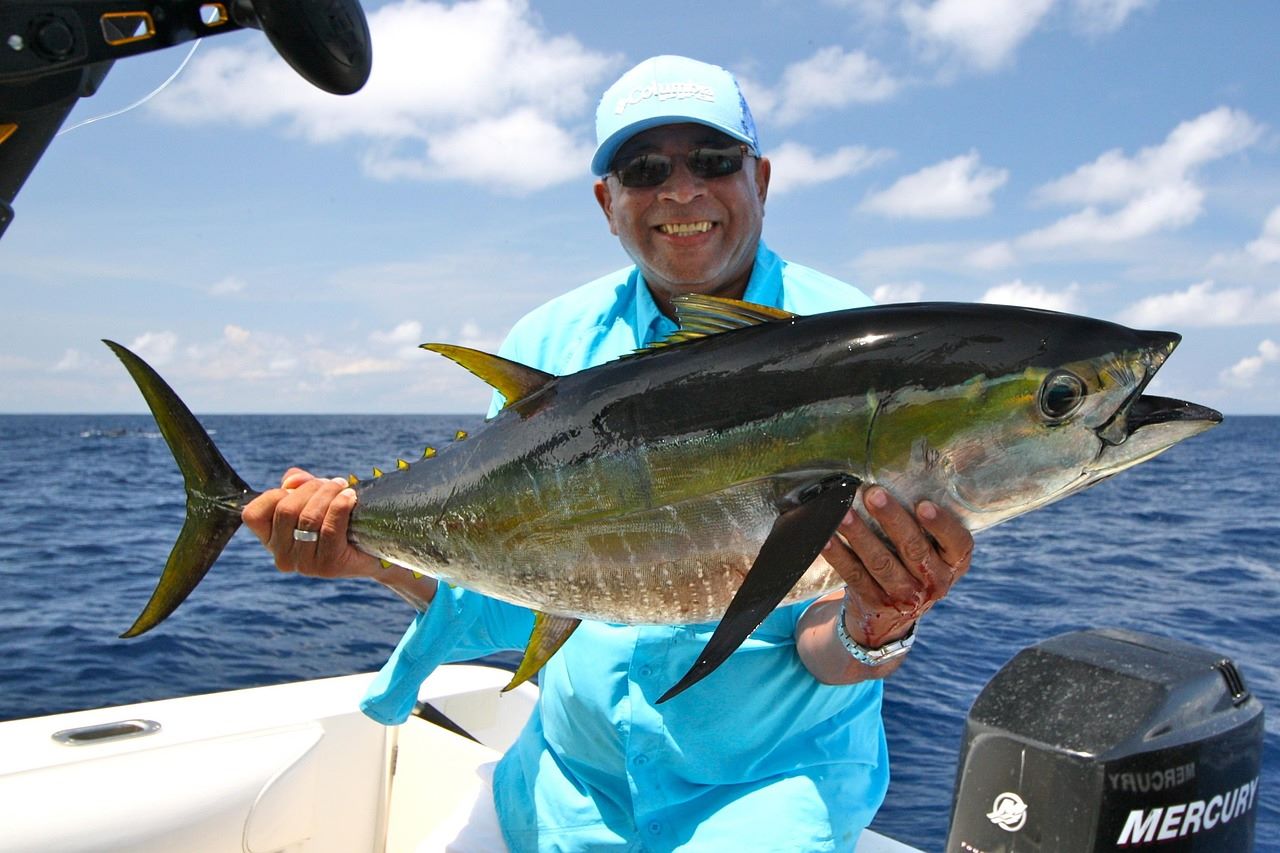
Imagine sailing over deep blue waters, sunlight rippling across the surface, as flashes of silver sweep past beneath the waves – the tuna, moving with speed and grace in their ocean home. If you want to experience where they live, watching them glide, chase, and feed, then tuna safari is the thing for you!
These are guided ocean tours where travellers can observe and, in some spots, even swim alongside or try sport-fishing for tuna in their natural environment.
It is part ocean expedition, part wildlife encounter, and for many, a thrilling peek into one of the ocean’s fastest, most powerful species — a world very few tourists even know exists.
Locations
1. Stad Seas / Møre Coast, Northwestern Norway
The coast around the Stad seas and the Møre region in Norway is one of the most intriguing destinations in the world for a tuna safari experience. The location is renowned specifically for large Atlantic Bluefin tuna. A mature Atlantic Bluefin tuna aged 4-20 years can weigh from around 30 kg to over 470 kg.
Tuna safaris are offered by various tour operators in the regions of Ålesund, Sandsøya (Sunnmøre), and Rosenlund. They use specialised boats designed for open-sea tuna fishing. The setting is wild and hence the tour requires proper gear, physical readiness, and good sea conditions. This is not typically a “swim-with-tuna” scenario, rather more of a watching and sport-fishing experience with Bluefin tuna. Four people at most are allowed in a boat and the tour lasts 8-10 hours.
The season starts in mid-July and lasts until the end of November, with the peak being mid-September to mid-November.
2. Øresund (Between Denmark & Sweden)
In the narrow strait between Denmark’s Zealand and Sweden’s Skåne region, Øresund has emerged as one of the most unexpected and thrilling locations in Europe for spotting large Atlantic tuna.
After decades of near-absence, these fish began returning in significant numbers around 2017, making the waters of Øresund a hotspot for tuna safari tours.
The tours are organised by the Øresund Aquarium in Helsingør, Denmark. Although sightings aren’t guaranteed, the aquarium emphasises that the chances are high thanks to the large schools of prey fish (herring, mackerel) and the region’s funnel-shaped seabed and current dynamics which attract tuna in this passage.
Large specimens (200-400 kg or more) have been reported often, with occasional sightings of “monster” fish. However, catching them is banned here, so the focus is on the wild spectacle rather than sport-fishing.
A boat holds up to 12 passengers and wearing life jackets is mandatory under rules by the Danish Maritime Authority.
3. L’Ametlla de Mar, Catalonia/ Tenerife, Canary Islands, Spain
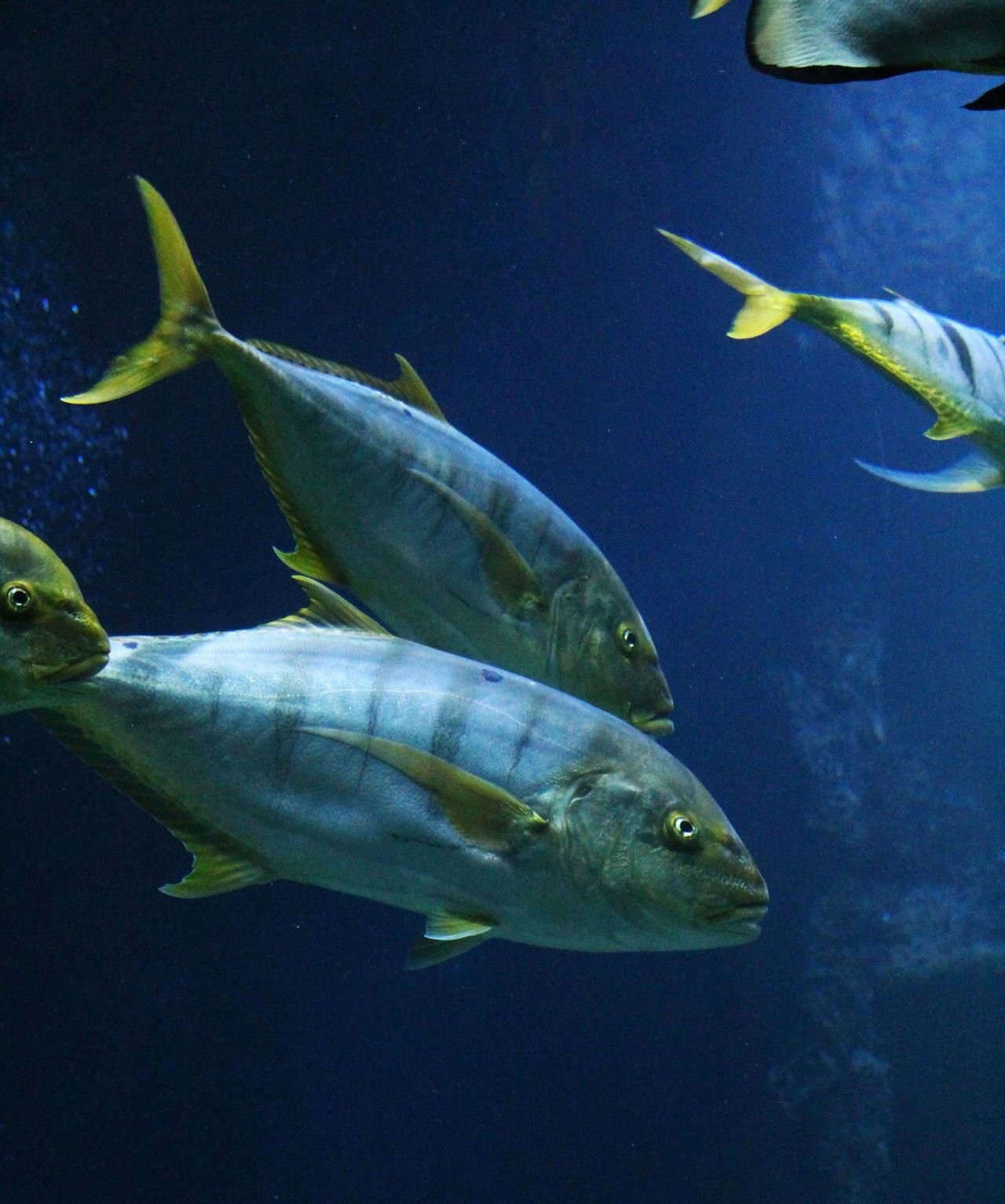
This Mediterranean coastal village is probably the best spot to experience swimming with big tuna, some over 200 kg and more than two metres in length. At Grup Balfegó’s facility near L’Ametlla de Mar, in the Catalonia region of Spain, you can board a boat, head out to a large sea-pen, and snorkel or dive with them.
Tours run from April to October. Visitors can get into the water and observe the fish up close. You enter a ring-net enclosure about 2.5 miles off the coast, around 20-35m deep, among hundreds of Bluefin tuna swimming around you. The tour also includes a video or lecture about tuna biology and fishing.
Tenerife, Canary Islands is another tuna spot in Spain, popular for Atlantic migratory tuna watching. Tenerife’s waters are famous for deep-sea pelagic migrations, including Bluefin and Bigeye tuna, which pass close to the islands.
Tour operators offer offshore tuna-spotting trips and cruises combining dolphins, whales, and tuna sightings. This is one of the most accessible tuna-watching holiday destinations due to proper tourism infrastructure.
4. Hout Bay, Cape Town, South Africa
For those dreaming of landing world-class Yellowfin tuna, this fishing experience in Cape Town, South Africa, will surely meet your expectations. This specialised adventure offers access to one of the planet’s most rewarding tuna fisheries — known for huge numbers and remarkable average fish size. Some of them can weigh over 100 kg.
Set in the Hout Bay, a picturesque coastal suburb of Cape Town, the journey takes visitors offshore to the meeting point of the Indian and Atlantic Oceans. This natural convergence zone offers nutrient-rich waters teeming with baitfish that draw in the powerful marine predators. Yellowfin tuna dominate these waters and are the prime focus here.
All excursions are carried out aboard specialised vessels suitable for navigating offshore areas. They are usually around 28 feet long and the design ensures outstanding stability and comfort for the passengers.
Safaris go on year-round but the peak season is from September to June.
5. Boca Chica, Gulf of Chiriqui, Panama
Bluewater Fishing Panama, situated in Boca Chica close to the lively city of David on Panama’s south coast, is renowned for saltwater tuna fishing. The region overlooks the beautiful Gulf of Chiriquí, and features some unique fishing hotspots like Hannibal Bank, Isla Montuosa, the Triangle, and Isla Ladrones. These are full of varied marine life and draw visitors eager to chase the giant Yellowfin tuna.
Hannibal Bank, only 20 miles offshore, stands out as a prime location for encountering these stunning fish. Here, Yellowfin tuna travel in large schools, chasing swift baitfish such as flying fish and sardines. While the average catch weighs around 40 kg, larger specimens are also found.
Fishing in this region is a year-round thrill, and May is the best time to go. Fleet of specialised offshore sportfishing vessels offer activities ranging from trolling and live bait fishing to jigging and popper casting.
6. Port Lincoln/ Granite Island, South Australia
The coastal town of Port Lincoln is often called the ‘Tuna capital of Australia’. Here, the spotlight is on the Southern Bluefin tuna, one of the ocean’s fastest and most graceful predators.
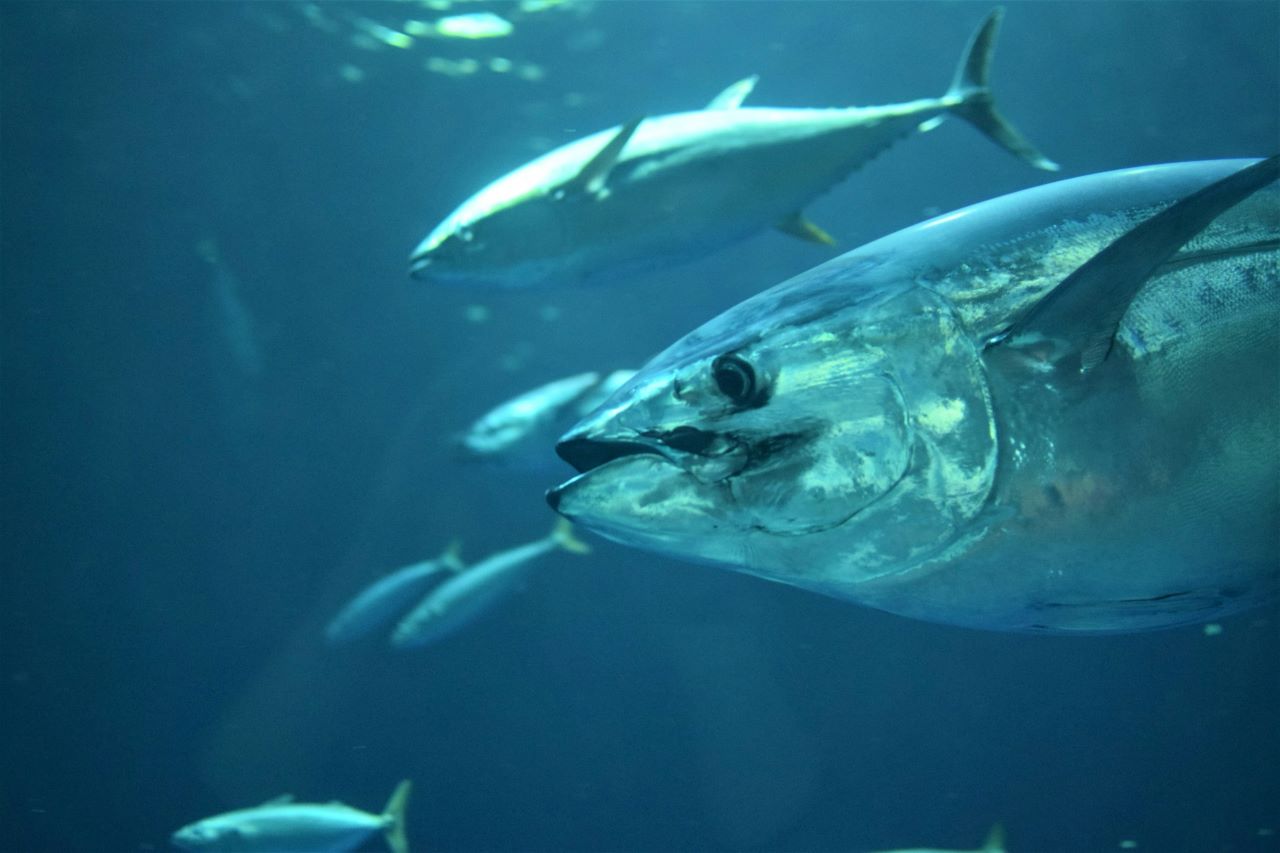
This region is home to one of the world’s first commercial tuna safari operations, where visitors are taken by boat to offshore pontoons floating over clear blue waters. Instead of just observing from afar, visitors can actually enter the water in specially designed sea pens or marine enclosures, swimming and snorkelling alongside these magnificent fish.
Open-water enclosures are maintained by safari organisers containing Southern Bluefin tuna and other large marine species. Once you are suitably geared up with a wetsuit, mask, and snorkel, you can slip into the “in-sea aquarium,” a purpose-built net enclosure that combines the thrill of open-water interaction with the security of a controlled environment.
The experience near Granite Island, also in South Australia, is slightly different. It’s more of a marine tourism encounter than a hardcore sport-fishing chase, making it ideal for families, casual swimmers, or anyone curious about ocean life.
Here, visitors can hand-feed the tuna, watch their lightning-fast feeding frenzies, and learn about the species’ ecology, life cycle, migration routes, and conservation challenges from the safari guides.
Apart from these well-known sites, tuna safaris take place in several other parts of the world. In Baja California, Mexico, you can chase gigantic Yellowfin and Bluefin tuna in the deep and warm Pacific waters through exciting offshore sport-fishing expeditions. Nova Scotia, Canada, is famous for giant Atlantic Bluefin tuna fishing charters, known for attracting huge catches.
Along the South Island coast of New Zealand, travellers can witness or fish for Southern Bluefin tuna, particularly off Fiordland and Otago. In the waters off San Diego, California, you can go for Pacific Bluefin tuna seasonal viewing and catch-and-release sport trips while the Florida Keys offer seasonal offshore fishing for Blackfin and Yellowfin tuna and sighting expeditions.
Japan’s coastal waters, particularly around Tsushima Strait, southern Honshu and Hokkaido, are well known for Pacific Bluefin tuna sport-fishing. Few areas in and around Seychelles, in the Indian Ocean, host guided safaris and are well known for deep-water fishing of Yellowfin and Skipjack tuna.
Conservation Issues
Tuna species — especially Bluefin and Yellowfin — have been heavily exploited for decades. The tours offering swimming with the big fish often use wild-caught tuna that are then transferred to pens/farms and fattened for tourism purposes. This may add stress to their natural lifestyle and habitat.
Large-scale sport fishing tourism for tuna must be managed carefully to avoid depletion. Tours offering catch & release should therefore be preferred. Yellowfin tuna are already over-exploited and overfished.
Environmental concerns include waste release and pollution from aquaculture pens, use of large quantities of smaller fish to feed and rear tuna, and the ethics of wildlife capture for tourism and greater harvest.
Tourists are recommended to have a clear idea (from the tour operators or otherwise) about a tuna safari — species, size limits, if it is catch & release, their sustainability policy, and how they mitigate environmental impact.
However, there is a positive side too. Responsible tuna tourism can raise awareness about tuna migration, marine ecosystems, sustainable fishing, and may generate revenue for conservation and local communities — if done properly.
So, while tuna safari is wonderful, a little mindfulness about the world behind the adventure makes the experience richer and more ethical.