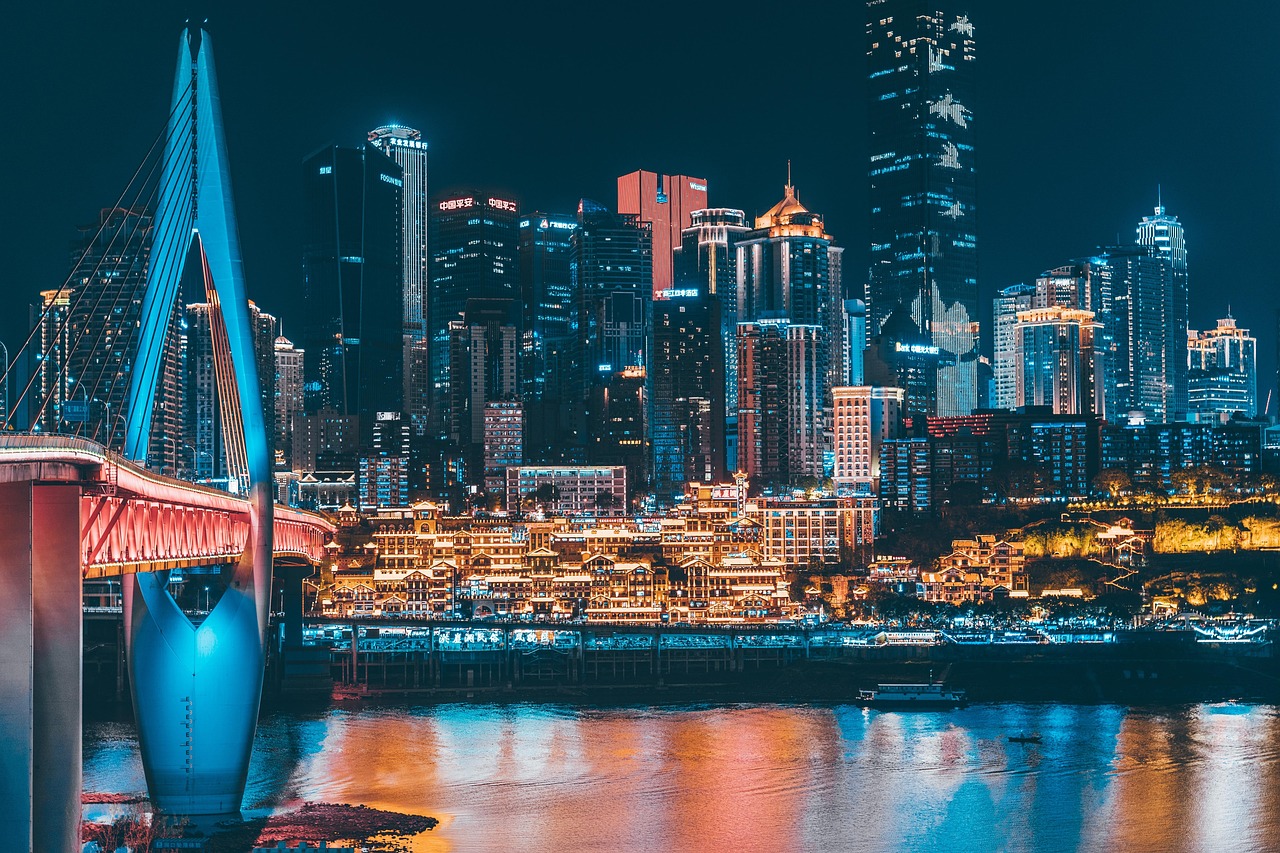
Chongqing isn’t the kind of city you understand at first glance. It doesn’t just exist — it overwhelms, puzzles, and captivates you. Perched amidst steep hills where the Yangtze and Jialing rivers converge, this sprawling megacity, often known as the “Cyberpunk City” or the “Cyberpunk Capital of the World,” has carved itself into the landscape in ways that seem bizarre and almost impossible.
Unlike China’s classic cities like Beijing or Shanghai, Chongqing is different – it doesn’t follow rules, it bends them. The city’s architectural marvel is born from its unique geography, massive population, and a passion for blending old and new, chaos and coherence, and history with futuristic imagination.
Chongqing feels like something out of a science fiction film — with architecture always at the heart of the story.
Shaped by Hills and Height
Chongqing is a vertical city. There’s barely any level terrain here – hills, valleys, and cliffs dominate the region, and that inspired architects and builders to think upwards, sideways, and diagonally. Roads twist over bridges, tunnels burrow through hills, and streets seem to layer on top of one another like a puzzle where the pieces never quite match.
Imagine walking onto the first floor of a building… and later finding out you are actually many stories above the real ground! Or stepping out of a metro station and landing on what feels like the fourth floor of a skyscraper because the city has built roads and pathways at different elevations everywhere. In Chongqing, ground level is literally a relative concept.
This multi-layered layout of the city is not just a fun quirk, but a result of intense topography. In a space squeezed between rivers and mountains, traditional urban planning would never have worked. So instead, Chongqing became something that looks like a 3D maze — imposing, thrilling, and totally unique.
Why Chongqing Feels Like ‘Cyberpunk’
As the sun sets over Chongqing, the cyberpunk vibe takes over. The city’s skyline is studded with neon lights and massive LED screens — oversized, bright, and continuously changing. Surrounding streets glow in waves of colour, as signage for everything from restaurants to tech advertisements blend together in a light show that feels like a futuristic metropolis straight from the movie Blade Runner.
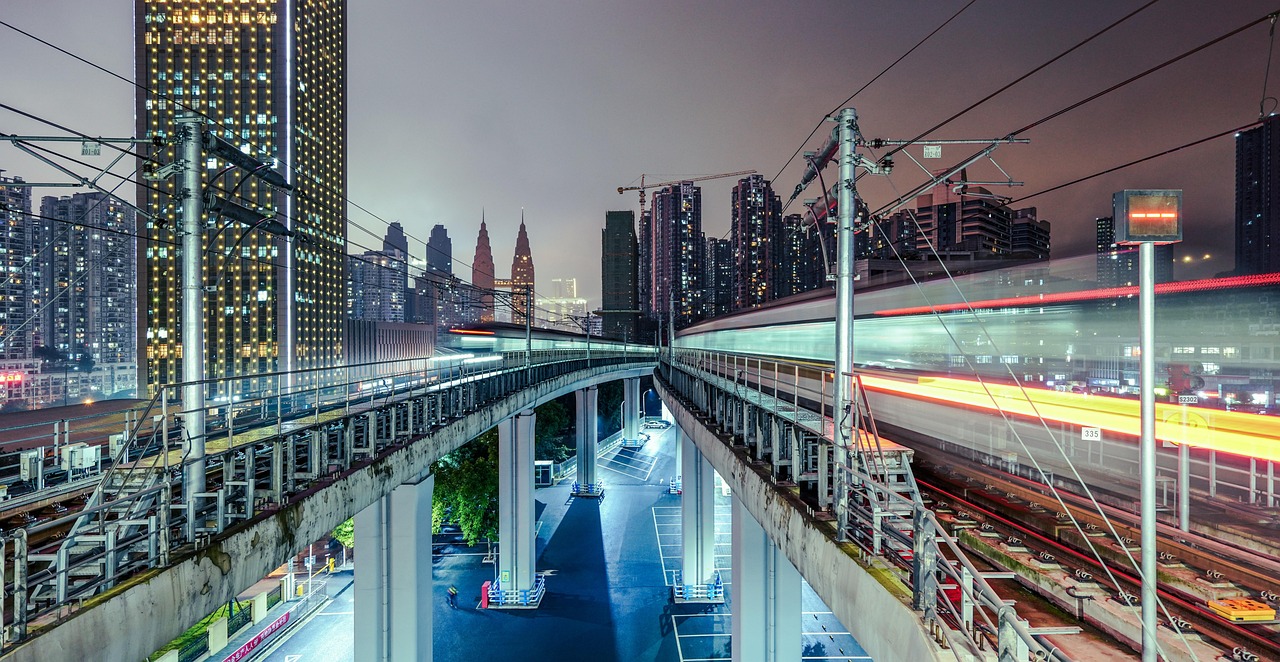
Futuristic skyscrapers rise right next to aging hillside walk-ups, where laundry still hangs casually from open windows, creating a striking contrast. Monorails often glide straight through residential buildings as part of their daily route, making it seem as though gravity has momentarily stepped aside.
Pedestrian pathways connect cliffs to towers and weave between different levels of the city, often blurring the line between indoor and outdoor spaces. And as evening settles in, foggy mist rises from the rivers, softening the neon glow and wrapping the skyline in an atmospheric haze that photographers can’t get enough of.
This visual blend gives the city a feel that’s familiar yet surreal. And it is not at all surprising that videos of Chongqing architecture have gone viral worldwide, and people can’t believe they are real!
Architectural Icons You Can’t Miss
Each of these places reveals a different facet of Chongqing’s complex architectural highlights.
- Liziba Monorail Station — Trains Inside Buildings
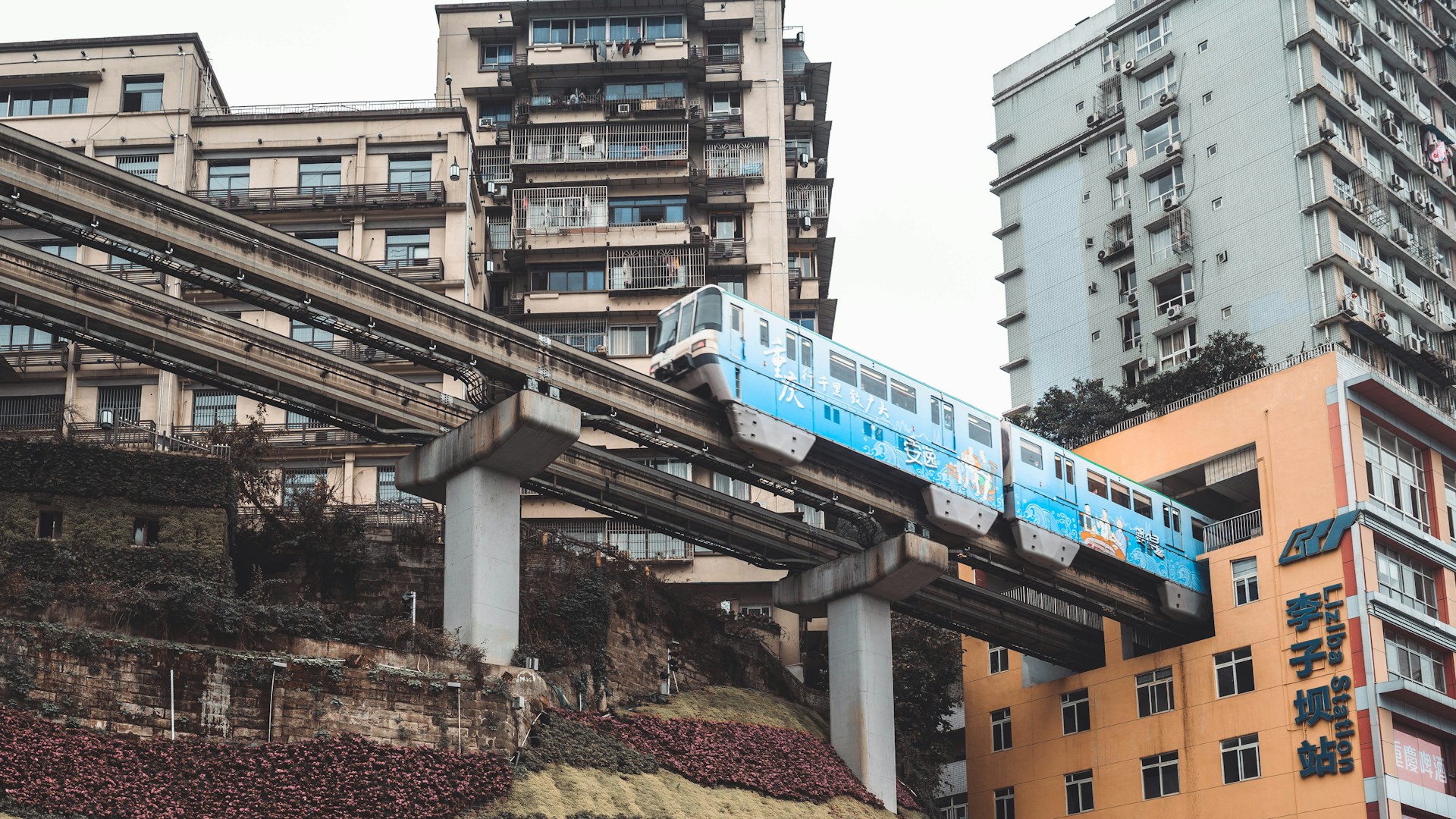
If there’s one image that defines Chongqing’s wild design logic, it’s this: a metro train passing through a residential tower as part of its usual route. Known as Liziba Station, this engineering marvel blurs the boundary between infrastructure and architecture.
This is designed in such a way that the vibration in the building is minimal allowing residents to live their daily lives while trains pass within arm’s reach. For visitors, this has become a popular photo spot. Watching a sleek train glide straight through a high-rise feels like a glitch in reality rather than a transit system.
Try to visit early in the morning or just after sunset when there is less crowd and you get to catch the best light.
- Hongya Cave — Old Meets New on a Cliffside
Hongya Cave is not actually a cave, but an 11-story complex built into a cliff above the Jialing River. By day, it resembles a traditional Chinese village with wooden balconies and layered terraces. But as dusk falls, thousands of lights glow up, transforming it into a dazzling spectacle of colour and reflection.
At night, Hongya Cave turns into a real-life version of a cyberpunk set. Its lights are mirrored in the river below, with the ultramodern blocks of Jiefangbei framing the distance.
It is very popular with tourists and one of the best places in Chongqing to experience how layered the city truly is – from ancient design principles to dazzling contemporary lighting.
- Raffles City Chongqing — Futuristic Sky Bridge
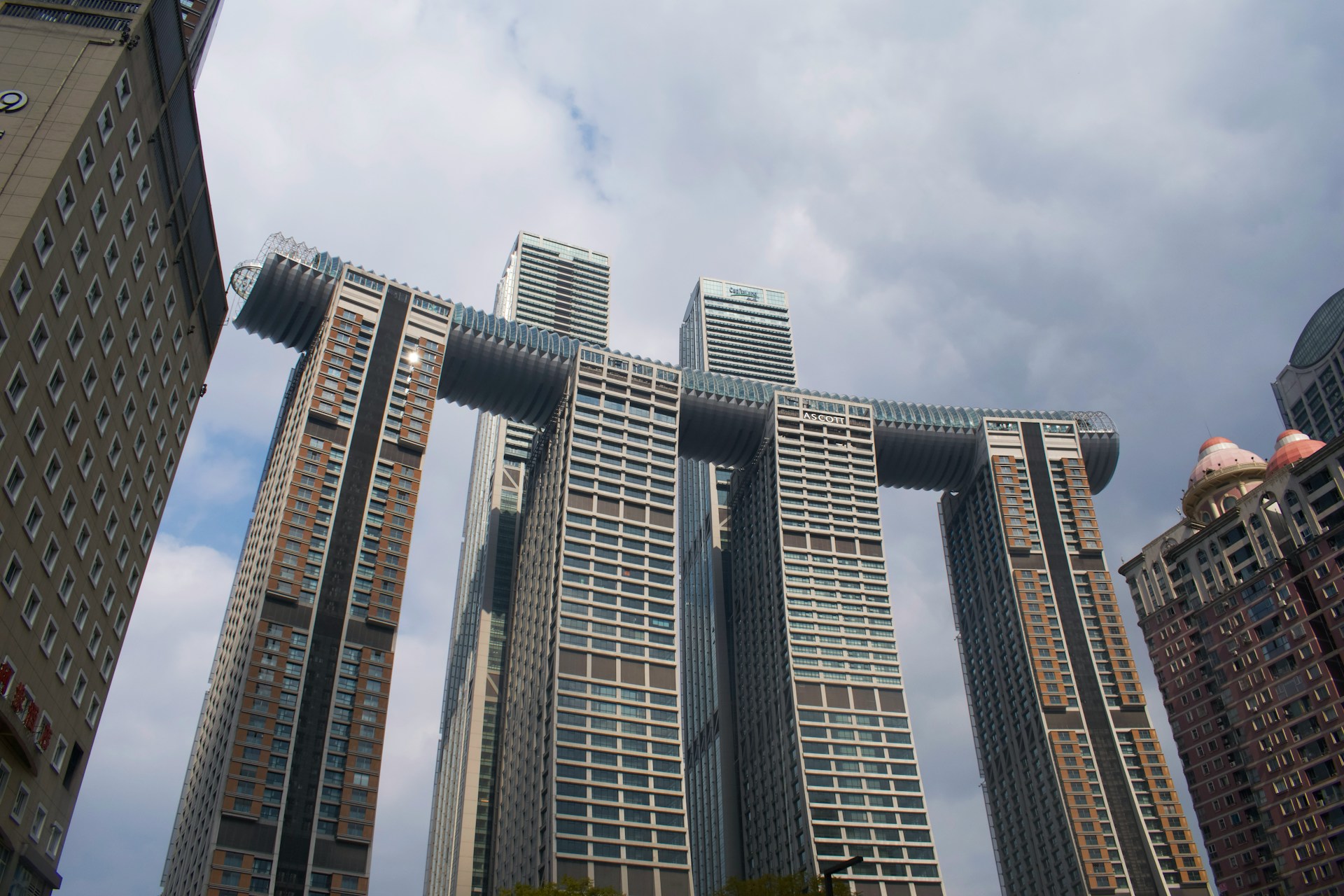
Towering above the confluence of the Yangtze and Jialing rivers, Raffles City Chongqing is a modern wonder composed of a cluster of towers connected by a horizontal sky bridge nearly 300 meters above ground.
Not just another glass building, the sky bridge is a vertical and horizontal skyscraper in itself, forming a public space with gardens, walkways, and panoramic views of the rivers and skyline. It feels like a floating universe where the city stretches out beneath you.
Architecturally, it symbolizes the city’s leap into the future, connecting concepts of public life, commerce, and community high above the bustling streets.
- Chongqing Art Museum — Futuristic Tradition
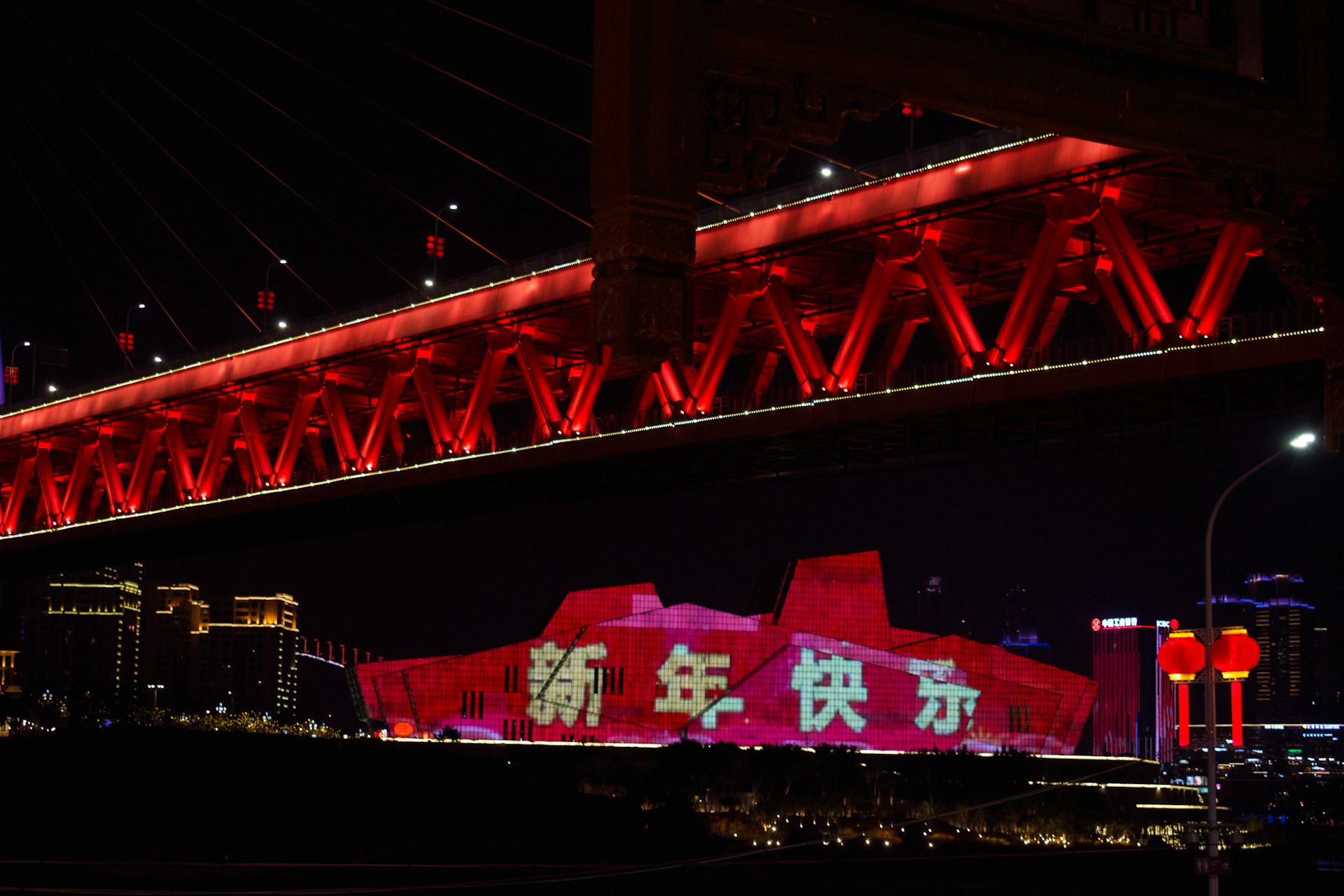
The Chongqing Art Museum (also known as the Guotai Arts Center) turns traditional Chinese motifs into bold modern architecture. Its façade is a web of red and black beams, inspired in part by chopsticks, and transformed into an enormous geometric lattice.
In daylight, the shadows and light play across its surfaces like a sculptural masterpiece. At night, strategic lighting makes it glow like a giant grid cube out of a digital dream. It’s a striking example of how Chongqing reinterprets tradition on its own terms.
What to See, Do, and Experience
Chongqing’s architectural magic spans beyond sightseeing — it’s a city you live in with your eyes wide open. Here are some experiences to add to your itinerary:
- Jiefangbei Pedestrian Street
In the heart of downtown, this busy district is Chongqing’s equivalent of Times Square, but bigger in size and more layered. Towering LED ads, glass towers, and neon signs converge here, creating a buzzing urban experience that blends commercial energy and cinematic spectacle.
- Crown Escalator & Cableway Views
Chongqing’s escalators and cable cars promise unique experiences. The Crown Escalator stretches impressively through the city’s slopes, and the Yangtze River Cableway offers stunning aerial views of skyscrapers, rivers, and bridges stitched together in dizzying fashion.
- Dive Into History at Ciqikou Ancient Town
While Chongqing is all about futuristic structures, nearby Ciqikou Ancient Town provides a quieter contrast. Cobblestone lanes, old tea houses, and ancient architecture nestle beside the high-tech parts of the city — a reminder that time in Chongqing flows in multiple dimensions.
- Nighttime Skyline Cruises
One of the best ways to absorb Chongqing’s architecture is from the water. Take a night cruise on the Yangtze or Jialing rivers and watch as skyscrapers, bridges, and cliffside complexes shimmer in lights. The experience is cinematic, yet surreal.
A City That Feels Alive
What makes Chongqing’s architecture truly unforgettable is not just its shapes or heights — it’s how the city feels. Unlike cities that separate living spaces, shopping streets, and scenic spots, Chongqing mixes everything. Trains run through apartments. Pedestrians walk above bustling roads. Ancient styles meet glass towers. Neon floods into fog.
In Chongqing, you don’t just observe architecture, you get the real cyberpunk thrill. You experience it with every step, every glance, and every twist in the maze of streets and paths. At times it can feel a little chaotic, but that chaos is where the beauty lies. The city’s layering, contrasts, and unexpected moments are sure to make you stop and ask, “Wait — did that just happen?”